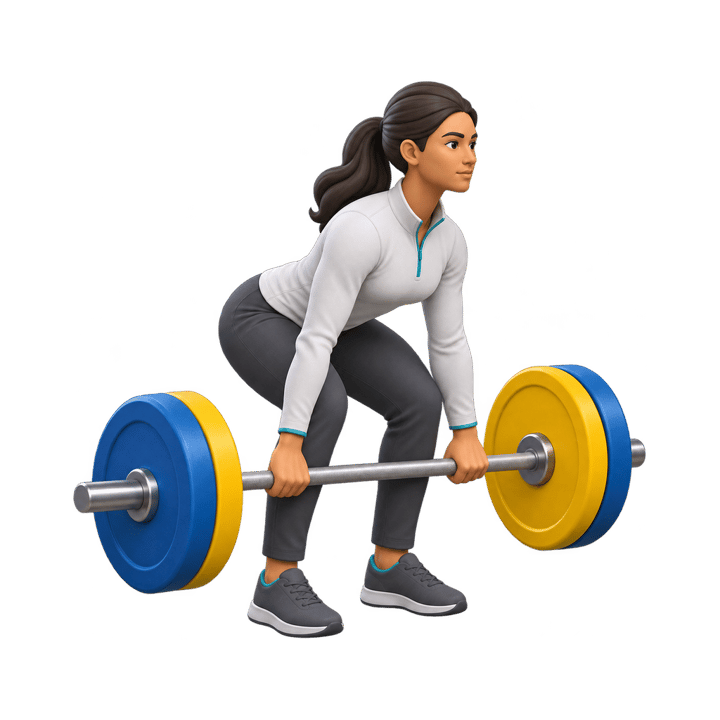
Strength training: how to build muscle and get stronger
On this page
- Why muscle is worth building
- How muscle grows: nerves first, then size
- The dose: how many sets, how many reps, how hard
- The weight has to go up
- Every muscle, front and back
- Food: enough protein, and enough food
- Rest: muscle grows between sessions
- It works at any age
- Test yourself
- A picture from daily life
- What changed since our old guide
- What the evidence doesn’t show
- The deep dives
- The simple plan
Everything you need to know about building muscle and strength comes down to six things. Lift two to four days a week. Train every big muscle, front and back. Make every set hard, stopping a rep or three before you’d fail. Add a little weight or a rep whenever you can. Eat enough protein and sleep. That’s how muscle gets built, at 25 or at 85, and everything else on this site is the detail.
Building muscle has a reputation for being complicated. There are six-day splits, secret rep ranges, supplements, “muscle confusion”, and the idea that you need the right genes or have to be young. Only about one in three US adults does strength work twice a week (32.9% in 2024), and part of the reason is that it looks like a second job, which it isn’t. In 2026, the American College of Sports Medicine pooled 137 reviews of more than 30,000 people and found that a few plain things did nearly all the work, and most of the complicated stuff made no consistent difference.
If you want to and you can, do all of it the natural way, with lifting, ordinary food and sleep. A shake fills a gap on a busy day and creatine adds a little strength, but nothing in the supplement aisle comes close to what the lifting does. How to build muscle naturally, without supplements.
 2 to 4 daysa week, every week. Two is enough to start.
 Every musclefront and back, upper and lower, not just the mirror ones.
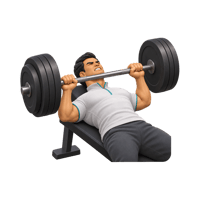 Hard sets2 or 3 a move, each ending 1 to 3 reps short of failure.
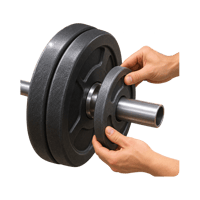 A little moreweight or reps, whenever every set hits its target.
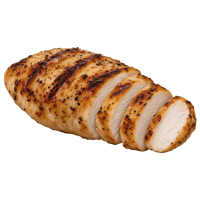 Proteinevery day, in the typical range or a bit above.
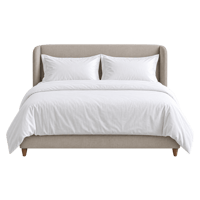 Sleepseven hours or more, since muscle grows between sessions.
What we’d do
Start with two full-body sessions a week, two or three days apart, about 45 minutes each. Do a squat, a hinge, a push, a pull, plus calves and core or a carry. Two sets of each for the first two weeks, then three. Stop every set when you have one to three good reps left, and add weight once every set hits the top of its range. After a few months, add a third day if you want more muscle. The strength protocol builds this for your level, days and equipment, and the quiz writes it out for you.
Why muscle is worth building
Muscle is how you carry your groceries, get up off the floor, climb stairs and catch yourself when you trip. You start losing it in midlife, about half a percent a year, closer to 1% a year by 75, and your strength falls two to five times faster than that. Grip strength alone predicted death better than systolic blood pressure did, in 139,691 adults across 17 countries. And in 147,374 US adults, 90 to 119 minutes of lifting a week went with a 13% lower risk of death, though those were people who chose to lift.
The looks are real too, and they’re a fine reason to start. But the reasons that hold up longest in the research are about keeping your body able. Why strength matters for a long life, how much lifting you need and what happens as you age. Lifting is half of a good week, and exercise.guide has the other half, cardio and the rest.
How muscle grows: nerves first, then size
When you start lifting, you get stronger within a couple of weeks, long before anything shows. That first gain is mostly your nervous system learning to switch on more of the muscle fibers you already have. In a 1979 study, nerve factors explained most of the strength gained in the first weeks, and muscle growth took over after about three to five weeks. In 2007, researchers scanned the thighs of seven young adults during 35 days of heavy training. Their strength rose 39%, and their muscle was measurably bigger by day 20.
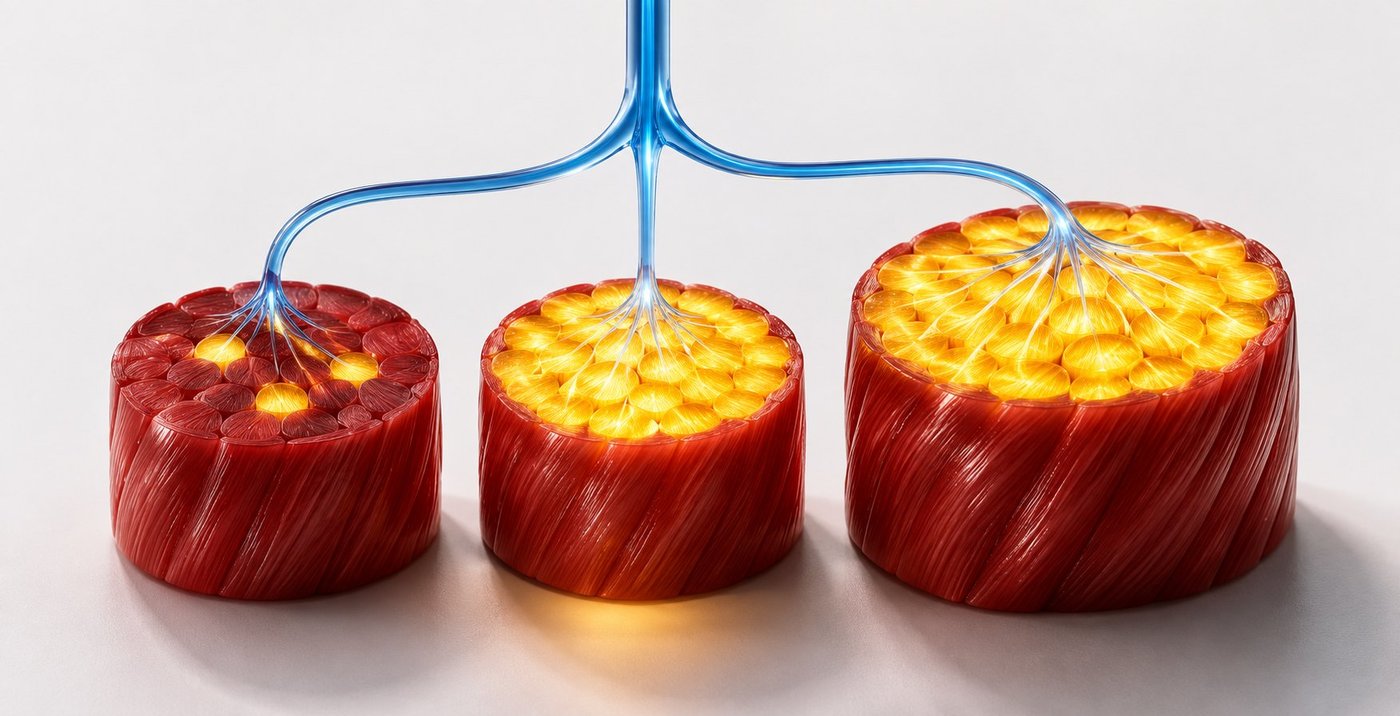
So the first month is about learning the moves, and the months after are when the muscle grows. What strength is, and why it grows before muscle and how long it takes to build muscle.
The dose: how many sets, how many reps, how hard
Count hard sets per muscle per week. The 2026 review found muscles grew most with 10 or more a week, with the gains flattening around 18 to 20. Each extra set adds a little (about 0.37% more growth a set in a 2017 analysis of 15 studies), so more works up to a point, and two days a week is a fine place to start.
Reps matter less than most people think. Heavy sets build the most one-rep max strength, but muscle grew about the same anywhere from about 30% to 100% of your max, as long as the sets were just as hard.
The most one-rep max strength. Muscle grows too, but it takes more sets to match.
Size and strength together, in the least time. The classic 8 to 12 sits here.
As much size, if the sets go close to failure, but each set takes longer and burns more.
What matters is that each set ends close to failure. Going all the way to failure added nothing in 15 studies, so stop when you have one to three good reps left. The strength protocol, are 8 to 12 reps best? and how many sets and reps.
The weight has to go up
In 1945, a US Army doctor named Thomas DeLorme was trying to get injured servicemen back on their feet. He had them do several sets at the most they could lift ten times, and by 1948 he’d settled on three sets of ten, each heavier than the last. He called it Progressive Resistance Exercise, and the word that still does the work is progressive. Muscle adapts to the load it meets and no further, so when the weight stops going up, the muscle stops changing.
Add the smallest step you have once every set hits the top of its range, then build the reps back up. It’s slow, and it’s the reason the program works for years instead of weeks. How to keep getting stronger, when to add weight and why you might not be getting stronger.
Every muscle, front and back
Most people start with what they see in the mirror: chest, arms, abs. Every one of those has a partner on the back of the body that pulls the other way, and a program that trains one side of each pair and skips the other leaves the joint between them pulled out of line.
The protocol puts every big muscle in every week, and each one has its own page with what it does and the best exercises at home and in a gym. Why balanced, not just bench, muscle by muscle, and the two regions people search for most, stronger legs and stronger arms.
Food: enough protein, and enough food
Lifting does the work, and food lets it happen. Typical protein is 1.2 to 1.6 g per kg of bodyweight a day, about 100 to 130 g at 180 pounds, and under 1.2 is too low for building muscle. In 49 trials, extra protein added muscle and strength on top of lifting, and the gains stopped rising past about 1.6 g per kg a day. The Gyroscope app personalizes yours. To gain muscle, eat a little more than you burn. To keep it while you lose fat, keep lifting and keep protein high. Creatine adds a small extra strength gain, and very little else in the supplement aisle does. Food comes first, and a shake is only for the days a meal falls short. What to eat to build muscle, how to build muscle naturally, protein.guide and creatine.guide.
Rest: muscle grows between sessions
The workout starts it, and the growth happens over the next day or two, mostly while you rest and sleep. In a 2021 trial, 13 young adults spent one night without sleep, and the muscle building after a meal the next day was 18% lower than after a normal night. Two days between sessions for the same muscles, a lighter week every couple of months and seven or more hours of sleep cover most of it. Soreness isn’t the sign it worked, and it fades after the first few weeks. Rest, sleep and recovery.
It works at any age
In 1990, ten frail nursing home residents aged about 90 lifted heavy weights with their legs for eight weeks. The nine who finished were 174% stronger and walked faster. Four years later, the same team randomly assigned 100 frail residents with an average age of 87 to train or not, and strength more than doubled in the trained group (113%, against 3% without). A nutrition drink on its own did nothing.
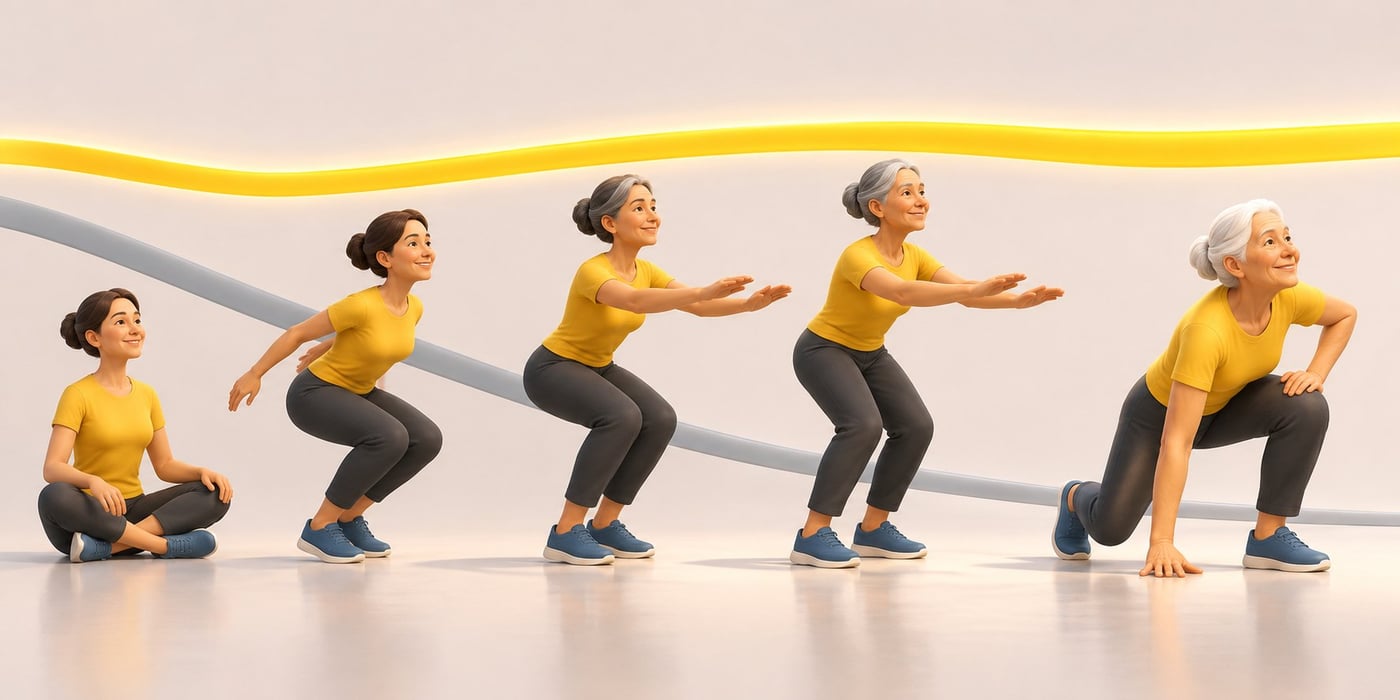
The program barely changes with age. The warm-up gets longer, the sets stop a little further from failure, balance practice gets added, and protein moves toward the top of the typical range. Can you build muscle after 40, 50 or 60?, what changes for women, beginners, over-60s and people on a GLP-1 and should women lift heavy?
Test yourself
You don’t need a one-rep max to know where you stand. Three home tests take ten minutes and track the strength that matters for daily life: push-ups, a dead hang and getting up off the floor. Do them now and again in eight weeks. How to test your strength at home has the rest, and the strength standards show what’s Good and Strong for each test and the squat.
A picture from daily life
Think about a guitarist’s fingertips. Calluses grow only on the fingers that press the strings, and only as thick as the playing asks. Play more and they thicken, and stop for a month and they soften.
Muscle works the same way with weight. It grows on the muscles you load, as much as the load asks, and it fades when you stop. That’s why every muscle needs its own work, and why the weight has to keep going up.
What changed since our old guide
Gyroscope’s first Muscle & Strength Guide covered this in five parts: the foundations, programming, nutrition, rest and the questions. The basics in it still hold. A lot of good research has come out since, so some numbers are new.
- How many sets. The old guide aimed for 9 to 18 hard sets per muscle a week. The 2026 ACSM review put the line at 10 or more, with gains flattening around 18 to 20, close to the same answer with far more data behind it.
- Reps. The old guide used the classic ranges (1 to 3 for strength, 8 to 15 for size). Newer reviews found muscle grows across a much wider range of loads when the sets are hard, so the protocol uses heavier sets on the big lifts and lighter ones on small moves.
- Protein. The old guide aimed for 0.7 to 1 g per pound. The network’s typical range is 1.2 to 1.6 g per kg, since gains stopped rising past about 1.6 in the pooled trials, with a higher range for lean people lifting hard.
- Muscle loss with age. The old guide said 3 to 5% a decade from your 30s. The newer reviews put it at about half a percent a year in midlife, closer to 1% by 75, with strength falling two to five times faster.
- Hormones and metabolism. We no longer list a testosterone boost or a faster metabolism as reasons to lift. A pound of muscle burns far less than people think, and tdee.guide has the real number.
What the evidence doesn’t show
- That lifting itself adds years. The big studies of lifting and death followed people who chose to lift, and lifters tend to be healthier in other ways. The trials show that lifting builds the muscle, strength and balance those studies tie to a long life.
- One best program. Planned cycles, special set schemes and equipment type made no consistent difference across the reviews. The best program is one that trains every muscle, hard, and that you keep doing.
- A safe plan for every heart. If you have heart disease or high blood pressure, ask your doctor before you add heavy lifting.
The deep dives
The simple plan
Here’s how we’d do it, for anyone who wants to get stronger and stay that way, at any age.
- Start the natural way, if you want to and if you can. Lifting, ordinary food and sleep build nearly all the muscle you’ll get, so leave the supplements for later, or for never. How to build muscle naturally.
- Test yourself once, tonight. Push-ups, a dead hang and getting up off the floor take ten minutes at home. Write the numbers down. How to test your strength at home.
- Lift twice a week, full body. A squat, a hinge, a push and a pull, plus calves and core, two or three days apart, about 45 minutes each. Two sets of each for the first two weeks, then three. The strength protocol lays out the week for your level and equipment.
- Make every set hard, and add a little. Stop each set with one to three good reps left. Once every set hits the top of its range, add the smallest weight step you have. How to keep getting stronger.
- Eat protein at every meal, and sleep. The typical range is 1.2 to 1.6 g per kg of bodyweight a day, about 100 to 130 g at 180 pounds, and the Gyroscope app personalizes yours. Sleep seven hours or more. What to eat and rest and recovery.
- Write down every set. The weight, the reps and how many you had left. When a lift stalls for a few weeks, the log shows you why. Why you might not be getting stronger.
- Retest every eight weeks, and grow the week. Do the same three tests the same way. After a few months, add a third day if you want more muscle, and take a lighter week every 6 to 8 weeks. If you have heart disease or high blood pressure, ask your doctor before you add heavy lifting.
17 sources
- Currier BS and others, ACSM position stand: resistance training prescription for muscle function, hypertrophy, and physical performance in healthy adults, Medicine and Science in Sports and Exercise, 2026pmc.ncbi.nlm.nih.gov
- Schoenfeld BJ, Ogborn D and Krieger JW, Dose-response relationship between weekly resistance training volume and increases in muscle mass, Journal of Sports Sciences, 2017europepmc.org
- Schoenfeld BJ and others, Loading recommendations for muscle strength, hypertrophy, and local endurance: a re-examination of the repetition continuum, Sports, 2021pmc.ncbi.nlm.nih.gov
- Grgic J and others, Effects of resistance training performed to repetition failure or non-failure on muscular strength and hypertrophy, Journal of Sport and Health Science, 2022pmc.ncbi.nlm.nih.gov
- Todd JS and others, Thomas L. DeLorme and the science of progressive resistance exercise, Journal of Strength and Conditioning Research, 2012europepmc.org
- Moritani T and deVries HA, Neural factors versus hypertrophy in the time course of muscle strength gain, American Journal of Physical Medicine, 1979europepmc.org
- Seynnes OR and others, Early skeletal muscle hypertrophy and architectural changes in response to high-intensity resistance training, Journal of Applied Physiology, 2007europepmc.org
- Morton RW and others, A systematic review, meta-analysis and meta-regression of the effect of protein supplementation on resistance training-induced gains in muscle mass and strength in healthy adults, British Journal of Sports Medicine, 2018pmc.ncbi.nlm.nih.gov
- Lanhers C and others, Creatine supplementation and lower limb strength performance: a systematic review and meta-analyses, Sports Medicine, 2015europepmc.org
- Lamon S and others, The effect of acute sleep deprivation on skeletal muscle protein synthesis and the hormonal environment, Physiological Reports, 2021pmc.ncbi.nlm.nih.gov
- Fiatarone MA and others, High-intensity strength training in nonagenarians, JAMA, 1990europepmc.org
- Fiatarone MA and others, Exercise training and nutritional supplementation for physical frailty in very elderly people, New England Journal of Medicine, 1994europepmc.org
- Mitchell WK and others, Sarcopenia, dynapenia, and the impact of advancing age on human skeletal muscle size and strength, Frontiers in Physiology, 2012pmc.ncbi.nlm.nih.gov
- Leong DP and others, Prognostic value of grip strength: findings from the PURE study, Lancet, 2015europepmc.org
- Zhang Y and others, Long-term resistance training with all-cause and cause-specific mortality, British Journal of Sports Medicine, 2026pmc.ncbi.nlm.nih.gov
- Healthy People 2030, PA-04: adults who do enough muscle-strengthening activity (NHIS)odphp.health.gov
- US Department of Health and Human Services, Physical Activity Guidelines for Americans, 2nd edition, executive summary, 2018odphp.health.gov