How long should I be able to dead hang?
On this page
Hang for a minute or more and you’re Strong on Gyroscope’s training bands, and 45 seconds is Good. Aim for the minute. Nobody has published hang times by age for adults, so a chart that claims to show what’s normal at 40 or 60 is guessing.
The dead hang has become a popular longevity test, passed around on podcasts and social posts. With it came charts of hang times by age and targets like a two-minute hang for a man in his 40s. They look official, but a search of the medical literature on November 14, 2026 found no adult norms for the dead hang, the bar hang or the flexed-arm hang. The numbers on those charts come from someone’s experience, which can be useful, but they don’t tell you where you stand against other people your age.
What we’d do
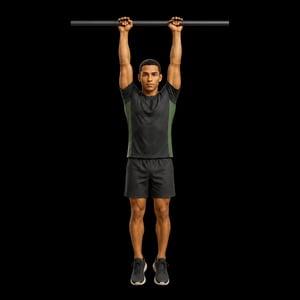
Use the hang as a training test, with the bands below and no age table. On most days, hang for 10 to 30 seconds and get down before your grip gives out. Every eight weeks, do one full hang on the same bar, timed the same way, and watch it climb toward a minute. Once you’re past 45 seconds, start working on your first pull-up.
Gyroscope’s hang bands
| How long you hang | Band |
|---|---|
| Under 20 seconds | Building |
| 20 to 44 seconds | Fair |
| 45 to 59 seconds | Good |
| A minute or more | Strong |
Gyroscope’s benchmark page calls these “training guides, not published clinical norms” and names the top band Excellent. The scorecard uses the same cutoffs on its four-step scale. They’re the same for women and men and for every age, because there’s no study to split them by.
How to time a hang
- Find a sturdy bar you can reach and get off safely, low enough that you land on your feet. Dry your hands and the bar. Chalk is fine, but no towel or straps.
- Grab the bar with both hands and let your arms go fully straight.
- Start the clock when both feet leave the ground. Don’t bend your arms or rest a foot on anything.
- Stop when a hand lets go, your feet touch down, or you have to step off. Write down the seconds.
The test timer says the rules out loud, counts you in and keeps the screen awake, so you can prop your phone up and just hang.
What gives out first
A dead hang feels like carrying heavy grocery bags from the car. The bags don’t get heavier as you walk, but at some point your fingers start to open. The hang works the same way. The muscles in your forearms that close your hand hold your whole bodyweight, and your shoulders hold your arms in their sockets while they do it.
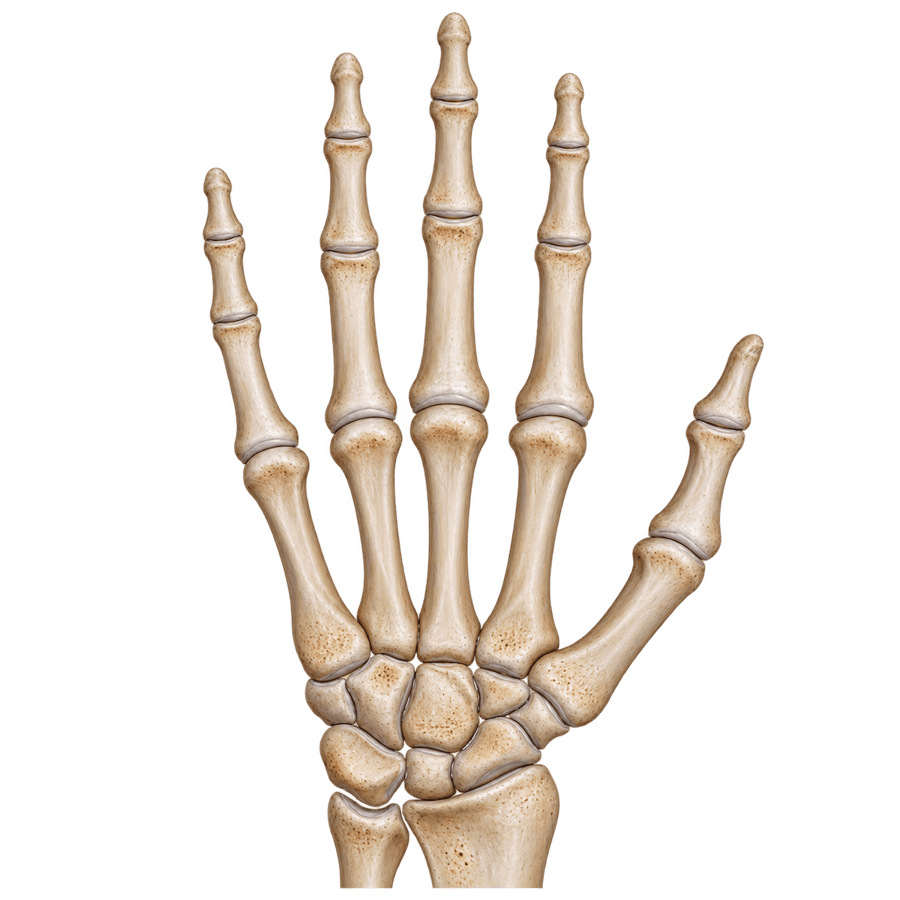
That’s why a hang and a grip squeeze aren’t the same test. A squeeze on a hand gauge is your single hardest effort. A hang is how long you can hold your own weight. Gyroscope’s benchmark page notes that the gauge medians “do not predict a dead-hang time”. Bodyweight changes the hang too. If you lose 20 pounds, there’s 20 pounds less to hold, so your time tends to go up even if your hands didn’t get stronger. If you’re losing weight fast, on a GLP-1 or otherwise, a squat set or a grip gauge tells you more about real strength.
0published adult hang norms
A search of the medical literature on November 14, 2026 found no table of adult hang times by age.
60 sStrong
The top band on Gyroscope’s training bands, the same for every age and both sexes.
139,691adults, 17 countries
Grip strength predicted death better than systolic blood pressure in the PURE study.
Why your grip is a good thing to track
The PURE study measured grip with a hand gauge in 139,691 adults aged 35 to 70 across 17 countries, and followed them for a median of four years. Each 5 kg (about 11 lb) less grip went with a 16% higher risk of death from any cause, and grip predicted death better than systolic blood pressure. That was a squeeze, not a hang, but the same hands do both jobs. A hang you can time at home is a fair way to keep an eye on them.
Grip is a sign of how strong your whole body is, so train the whole body and let the hang follow. Carries, rows and the hang itself do most of the work.
If your shoulders hurt when you hang, come down and get them looked at before you try again.
What to do next
Under 20 seconds, do short hangs of 10 to 20 seconds on most days, with your feet ready to take some weight, and add a few seconds a week. Between 20 and 45, add carries and rows to your week. Past 45 seconds, start on your first pull-up with slow lowering from the top of the bar. Your grip lives in your forearms and your hang leans on your lats, so how to build a strong grip and forearms and how to build a strong back have the exercises, and the strength protocol puts them in your week.
3 sources
- Gyroscope, Grip strength and dead hang benchmark, practical bands and protocolgyrosco.pe
- Leong DP and others, Prognostic value of grip strength: findings from the Prospective Urban Rural Epidemiology (PURE) study, The Lancet, 2015europepmc.org
- Europe PMC search for adult dead hang, bar hang and flexed-arm hang norms, 2026-11-14europepmc.org