Why does strength matter so much for a long life?
On this page
Four cheap tests (getting up off the floor, grip, push-ups and standing on one foot) tracked who lived longest in studies of up to 139,691 people. In one, grip predicted death better than systolic blood pressure (the top number) did. The strength and balance behind all four come back within weeks of training, at any age.
Most people file strength under looks or sport, something for gym regulars and athletes. Doctors measure your blood pressure and cholesterol, and nobody asks you to sit down on the floor and stand back up. But in studies that followed tens of thousands of people for years, these small physical tests sorted the long lives from the short ones, and grip did it better than blood pressure.
What we’d do
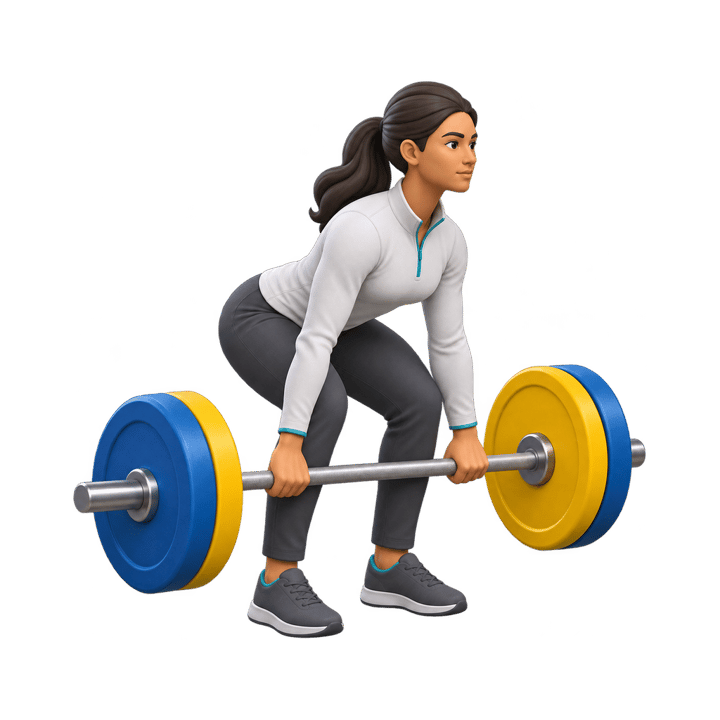
Treat the four tests like a dashboard. Do them at home every eight weeks, the same way each time, and put your effort into the weakest one. Then lift twice a week and walk most days, since that’s what moves all four at once. Don’t train for one test alone. A grip that gets stronger while the rest of you stays the same isn’t what the studies measured.
If you remember three things
- Grip predicted death better than systolic blood pressure in 139,691 adults across 17 countries.
- The floor rise sorted people over 12 years. 3.7% of perfect scorers died, against 42.1% of the lowest, in adults aged 46 to 75.
- These are signs, and the strength behind them is trainable. Seven young adults got 39% stronger in five weeks, and 90-year-olds in a nursing home gained 174% in eight.
Why would a party trick predict anything?
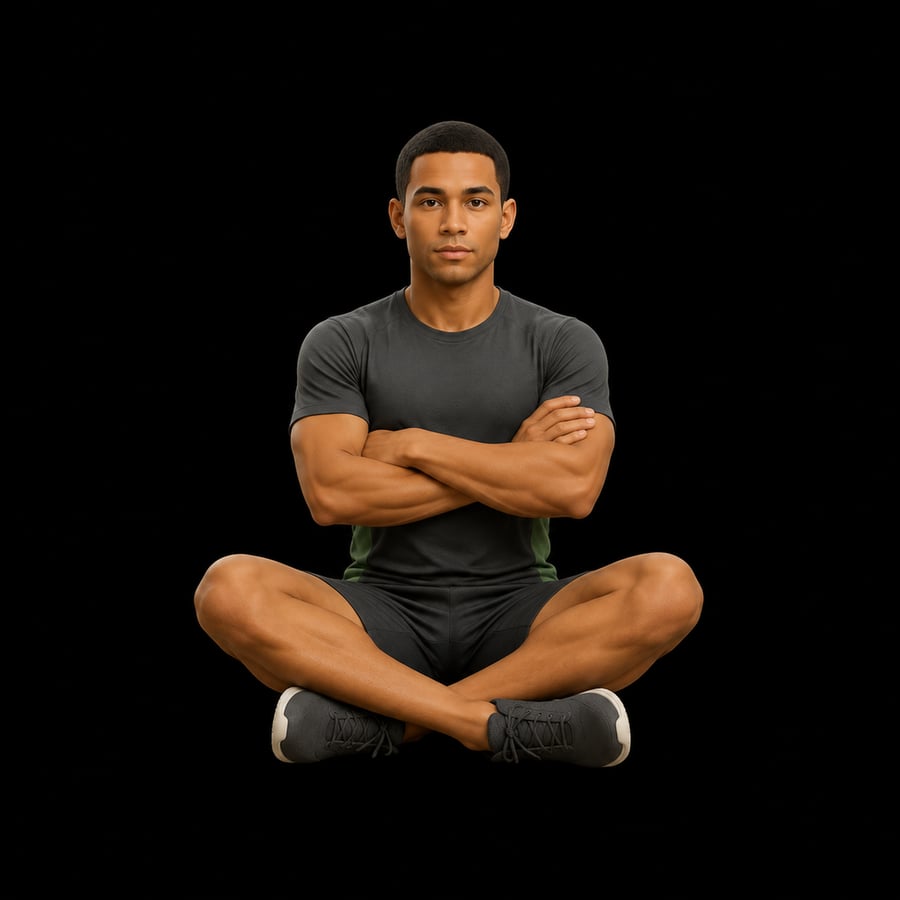
Sitting down on the floor and getting back up looks like something you’d do at a party. But it asks for leg strength, balance, flexibility and coordination all at once, and it needs enough of each for your own bodyweight. The test came from sports medicine researchers in Brazil in the 1990s. Claudio Gil Araujo, who led the studies, said people who pass it well are “in the higher quartile of musculo-skeletal fitness”.
Grip is a smaller window onto the same thing. A 2019 review of grip in older adults found it explains a person’s overall strength well, and that it goes with bone density, nutrition, memory, mood and quality of life. A strong hand is usually attached to a strong, healthy body.
A picture from daily life
A home inspector bounces on the floorboards as they walk through a house. One bounce doesn’t tell them what’s wrong. But a floor that gives tells them something about the beams underneath, and that’s the cue for a closer look.
These tests are the bounce. They’re cheap, quick and a little crude, and they tell you a lot about what’s underneath. And unlike a house, you can replace the beams yourself.
The floor rise
The first study, published in 2012, scored 2,002 adults aged 51 to 80. Sitting down and standing up were each worth 5 points, with a point off for every hand, knee or other support. Over about six years, each extra point went with 21% lower mortality, and the lowest scorers had 5 to 6 times the risk of people who scored 8 or more.
In 2025 the same team published a much bigger follow-up. They scored 4,282 adults aged 46 to 75, now with half a point off for a wobble, and followed them for a median of 12.3 years. This is how many in each group died over that time.
Score 10: 4 in 100
Score 0 to 4: 42 in 100
Score 103.7%
8.5 to 9.57.0%
811.1%
4.5 to 7.520.4%
0 to 442.1%
After taking age, sex, weight and health conditions into account, the lowest group’s risk of dying of natural causes was 3.84 times the top group’s, and their risk of dying of heart disease was 6.05 times. These are a group’s past, in middle-aged and older adults, and your score moves with practice. Score your floor rise.
Grip
The PURE study measured the grip of 139,691 adults aged 35 to 70 in 17 countries, rich and poor, and followed them for a median of four years. Every 5 kg (11 lb) less grip went with 16% higher risk of death from any cause and 17% higher risk of death from heart disease. Grip predicted both better than systolic blood pressure did.
What grip didn’t predict is interesting too. It had no link with diabetes, falls or fractures in that study, which fits the idea that a squeeze is a cheap window onto how strong and healthy the rest of you is. What’s a good grip strength?
Standing on one foot
In 2022 the floor rise team tried something even simpler. 1,702 adults aged 51 to 75 stood on one foot for 10 seconds, the other foot resting on the back of the standing leg, arms by their sides. One in five couldn’t. Over a median of seven years, 4.6% of those who could died, against 17.5% of those who couldn’t, and after age, sex, weight and health conditions, their risk was 84% higher.
How many couldn’t hold 10 seconds rose fast with age.
Balance is what keeps a stumble from turning into a fall. More than one in four US adults 65 and older falls each year, and falls send about 4.5 million older people to the emergency room. How long should you be able to stand on one leg?
Push-ups
The famous push-up study followed 1,104 male firefighters in Indiana, average age 39.6, for 10 years. They did push-ups in time with a metronome until they couldn’t keep up or reached 80. Heart events per 100,000 person-years fell from 1,757 in men who did 0 to 10 push-ups to 79 in men who did 41 or more.
It’s a striking curve, but it comes from 37 heart events in all, only one of them in the 41-plus group, and every person in it was a working male firefighter. The authors said it may not apply to women, older people or people who don’t exercise. How many push-ups should I be able to do?
And lifting itself?
The tests measure what you have. The question most people care about is whether building more of it helps. In the biggest study so far, 147,374 US health professionals followed for up to 30 years, people who lifted 90 to 119 minutes a week had a 13% lower risk of death than people who didn’t lift, after taking their walking and other exercise into account. A 2022 review of 16 studies found lifters had about 15% lower death rates. How much you need has the full numbers, and the surprise about walking.
Don’t healthy people just do better on tests?
The sceptic says
The arrow points the wrong way. People who are already sick do worse on every test, so of course low scorers die sooner. The test didn’t do anything.
The reply
Part of that is true. The studies took known health conditions into account and the link held, but they can’t catch everything. What we do know from trials is that the strength and balance behind the tests can be rebuilt fast. In 1990, nine frail nursing home residents aged about 90 gained 174% in leg strength in eight weeks and walked 48% faster on a balance walk. In 2007, seven young adults gained 39% in five weeks.
Nobody has run the trial that would settle it, where thousands of people train to raise their scores and researchers count who lives longer. Until someone does, we’d train anyway, since the strength itself makes daily life easier and lowers the odds of a fall.
More detail: why grip beat blood pressure
Blood pressure is a measure of one system, the heart and arteries. Grip goes with much more than that. A 2019 review linked it to bone density, poor nutrition, memory problems, depression and having several illnesses at once, so it picks up trouble anywhere in the body. That’s also why a gripper alone is unlikely to help much. It would raise the number without changing the things the number was picking up. Train your grip and you’ll live longer goes through it.
12 sources
- Araujo CGS and others, Sitting-rising test scores predict natural and cardiovascular causes of deaths in middle-aged and older men and women, European Journal of Preventive Cardiology, 2025europepmc.org
- Brito LBB and others, Ability to sit and rise from the floor as a predictor of all-cause mortality, European Journal of Preventive Cardiology, 2014, reported atnews-medical.net
- Leong DP and others, Prognostic value of grip strength: findings from the PURE study, Lancet, 2015europepmc.org
- Bohannon RW, Grip strength: an indispensable biomarker for older adults, Clinical Interventions in Aging, 2019pmc.ncbi.nlm.nih.gov
- Araujo CG and others, Successful 10-second one-legged stance performance predicts survival in middle-aged and older individuals, British Journal of Sports Medicine, 2022europepmc.org
- UPI, Ability to stand on one leg may predict longevity, 2022upi.com
- Yang J and others, Association between push-up exercise capacity and future cardiovascular events among active adult men, JAMA Network Open, 2019pmc.ncbi.nlm.nih.gov
- Zhang Y and others, Long-term resistance training with all-cause and cause-specific mortality, British Journal of Sports Medicine, 2026pmc.ncbi.nlm.nih.gov
- Momma H and others, Muscle-strengthening activities are associated with lower risk and mortality in major non-communicable diseases, British Journal of Sports Medicine, 2022pmc.ncbi.nlm.nih.gov
- Fiatarone MA and others, High-intensity strength training in nonagenarians, JAMA, 1990europepmc.org
- Seynnes OR and others, Early skeletal muscle hypertrophy and architectural changes in response to high-intensity resistance training, Journal of Applied Physiology, 2007europepmc.org
- Centers for Disease Control and Prevention, Facts about older adult fallscdc.gov