Can you still build muscle after 40, 50 or 60?
Yes, at 40, 50, 60 and well past 90. In 49 studies of adults aged 50 to 83, about five months of lifting added an average of 2.4 lb (1.1 kg) of lean mass. Lift the same way a younger person would, two or three times a week with hard sets, and give yourself longer warm-ups and bigger servings of protein.
After 40, a lot of people assume the best they can do is slow the slide. They figure their hormones have dropped, recovery takes longer, and the gym was built for 25-year-olds. Plenty of people think lifting at 60 is how you hurt your back. The surprising part is that older muscle still grows when you load it, and some of the biggest jumps in the research came from people in their 80s and 90s.
What we’d do
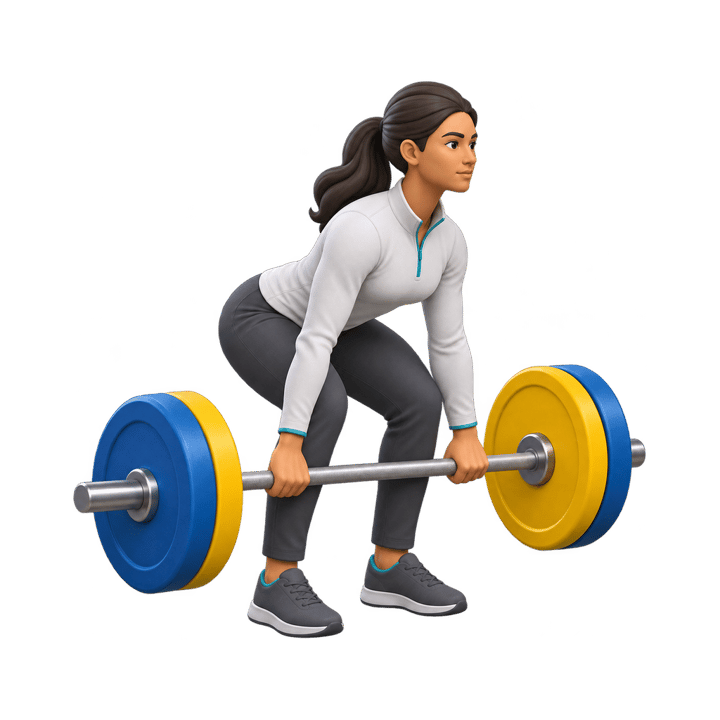
Lift two or three times a week, every big muscle, with the same plan anyone would use. Start with 2 sets for two weeks, then 3. Warm up with one or two light sets of each big lift before your working sets. Stop every set 2 or 3 reps short of failure instead of grinding out the last rep. Eat protein at the upper end of the typical range, with a bigger serving at each meal than you’d have needed at 25. If you have heart disease or high blood pressure, ask your doctor before you add heavy lifting.
What you lose, and when
Muscle fades slowly at first. In a 2000 study that scanned 468 men and women aged 18 to 88, the total amount of muscle didn’t drop noticeably until around 50, and most of the loss after that came from the legs. A 2012 review put the typical loss at about 0.47% of muscle a year for men and 0.37% for women, speeding up to about 0.6 to 1% a year by 75. Strength falls two to five times faster than that. How fast do you lose muscle as you age? has the full picture.
Getting older is like rowing against a slow current. Stop rowing and you drift back a little every year. Row twice a week and you move upstream anyway, because lifting adds muscle much faster than age takes it.
What lifting gives back
Adults 50 to 83
49 studies, 1,328 people, Medicine and Science in Sports and Exercise, 2011
Programs averaging 20.5 weeks added 2.4 lb (1.1 kg) of lean mass. Higher-volume programs added more. The authors put the yearly loss in inactive adults over 50 at about 0.4 lb (0.18 kg), so five months of lifting won back about six years of it.
The oldest people gained a little less than the younger ones.
Ages 19 to 78
287 untrained adults in Finland, Age, 2016
Two full-body sessions a week for 20 to 24 weeks grew thigh muscle 4.8% on average, and age and sex made no difference to how much people gained.
People varied a lot, from 11% smaller to 30% bigger.
Age 90
10 frail nursing home residents, JAMA, 1990
They did eight weeks of heavy leg training. The nine who finished gained 174% in strength and 9% in thigh muscle, and walked 48% faster on a balance walking test.
It was ten people, one muscle group and eight weeks.
Maria Fiatarone and her team then ran a bigger trial. In 1994 they gave 100 nursing home residents, average age 87 and as old as 98, either 10 weeks of lifting or none. The lifters’ strength rose 113%, against 3% in the others, and their stair-climbing power rose 28%. Thigh muscle grew 2.7%, a small change that could have been chance. A nutrition supplement on its own did nothing for any of the main results.
What changes with age
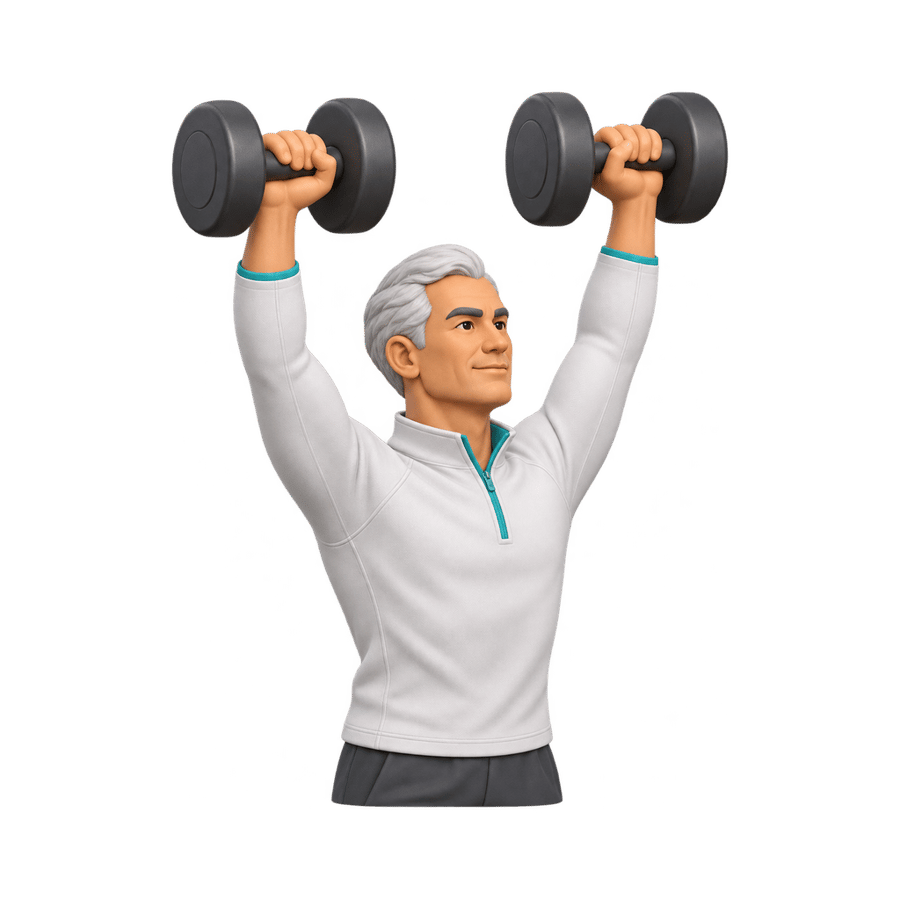
The program stays the same, and a few details shift. Take a longer warm-up, five minutes of easy movement and a light set or two of each big lift, before the heavy sets. Stop every set with 2 or 3 reps left. The 2026 position stand from the American College of Sports Medicine (ACSM) found training to failure didn’t consistently add anything, and its authors suggested lifting to failure may be a bad idea for some older adults because of the strain on blood vessels. If you’re still stiff or sore when the next session comes around, keep the session and drop a set from each move.
Each meal needs more protein, too. In 2015, researchers pooled their lab studies and found men around 71 needed about 0.40 g of protein per kg of bodyweight at one meal to get the full muscle-building response, against 0.24 for men around 22. Under 1.2 g per kg a day is too low, and 1.2 to 1.6 g per kg is typical, about 100 to 130 g at 180 pounds. Aim for the upper end of that range. The Gyroscope app personalizes yours. protein.guide explains why you need more after 50.
8 sources
- Peterson MD, Sen A and Gordon PM, Influence of resistance exercise on lean body mass in aging adults: a meta-analysis, Medicine and Science in Sports and Exercise, 2011pmc.ncbi.nlm.nih.gov
- Ahtiainen JP and others, Heterogeneity in resistance training-induced muscle strength and mass responses in men and women of different ages, Age, 2016pmc.ncbi.nlm.nih.gov
- Fiatarone MA and others, High-intensity strength training in nonagenarians, JAMA, 1990europepmc.org
- Fiatarone MA and others, Exercise training and nutritional supplementation for physical frailty in very elderly people, New England Journal of Medicine, 1994europepmc.org
- Mitchell WK and others, Sarcopenia, dynapenia, and the impact of advancing age on human skeletal muscle size and strength, a quantitative review, Frontiers in Physiology, 2012pmc.ncbi.nlm.nih.gov
- Janssen I and others, Skeletal muscle mass and distribution in 468 men and women aged 18-88 yr, Journal of Applied Physiology, 2000europepmc.org
- Moore DR and others, Protein ingestion to stimulate myofibrillar protein synthesis requires greater relative protein intakes in healthy older versus younger men, Journals of Gerontology Series A, 2015europepmc.org
- Currier BS and others, ACSM position stand: resistance training prescription for muscle function, hypertrophy, and physical performance in healthy adults, Medicine and Science in Sports and Exercise, 2026pmc.ncbi.nlm.nih.gov