How to build strong hamstrings
On this page
Your hamstrings are the three muscles down the back of your thigh. They bend your knee and straighten your hip, and in a sprint they brake your swinging leg on every stride, which is why they get hurt more than any other muscle group in soccer. Train them with Romanian deadlifts and leg curls twice a week, and add Nordic curls if you sprint or play a sport.
Most people think squats and lunges take care of the backs of the legs, or they think of the hamstrings as the tight muscle you stretch before a run. But squats barely grow them, and a stretch doesn’t make them strong. The hamstrings need their own work, a hinge and a curl, and the moves that pull hard while the muscle is long are the ones that protect it from tearing.
What your hamstrings do
Your hamstrings are three muscles. The biceps femoris is on the outside, with a long head and a short head, and the semitendinosus and semimembranosus are on the inside. All of them except the short head start on your sit bone, at the bottom of your pelvis, and run down past the back of your knee to your shin. Because they cross two joints, they do two jobs. They bend your knee, and they straighten your hip, pulling your thigh back behind you.
With your glutes, they lift you back up after you bend over to pick up a laundry basket, and they power the push in a deadlift or a jump. When you walk, their main job is braking. As your quads swing your lower leg forward, your hamstrings slow it down so your knee doesn’t snap straight at the end of each step. The faster you go, the harder that braking gets.
Why you want strong hamstrings
They’re the brakes in a sprint. In 2012, researchers filmed seven people sprinting on an indoor track and fed the data into a computer model of the body with 92 muscles and tendons. All three hamstrings hit their longest stretch and their biggest force at the same moment, at the end of the swing just before the foot lands, when they’re stopping the lower leg from flying forward. That’s when the muscle is both stretched and pulling hardest, and the researchers think it’s when the hamstrings are most likely to tear. They recommended heavy lowering work with the muscle at long lengths to protect them.
They’re the most injured muscles in soccer. Researchers followed 2,299 male professional players on 51 teams across Europe from 2001 to 2009. Of 2,908 muscle injuries, 37% were in the hamstrings, ahead of the inner thigh (23%), the quads (19%) and the calves (13%). In a wider count of every injury in elite European teams, a thigh strain was the single most common injury of all, 17% of them.
Nordic curls cut those injuries about in half. In a 2011 Danish trial, 50 men’s soccer teams, pro and amateur, with 942 players between them, were split into two groups. Half did a 10-week Nordic curl program that built up slowly, then kept it going once a week through the season. Over that season, the Nordic group had 15 hamstring injuries and the usual-training group had 52. Repeat injuries fell the most, by about 86%. A 2019 meta-analysis pooled 15 studies of 8,459 athletes, women and men, across different sports and ages, and found programs that included Nordic curls cut hamstring injuries by 51%. Using only the randomized trials, the drop was 48%. All the studies were in athletes, so it’s less clear what Nordics do for someone who mostly walks and lifts.
What we’d do
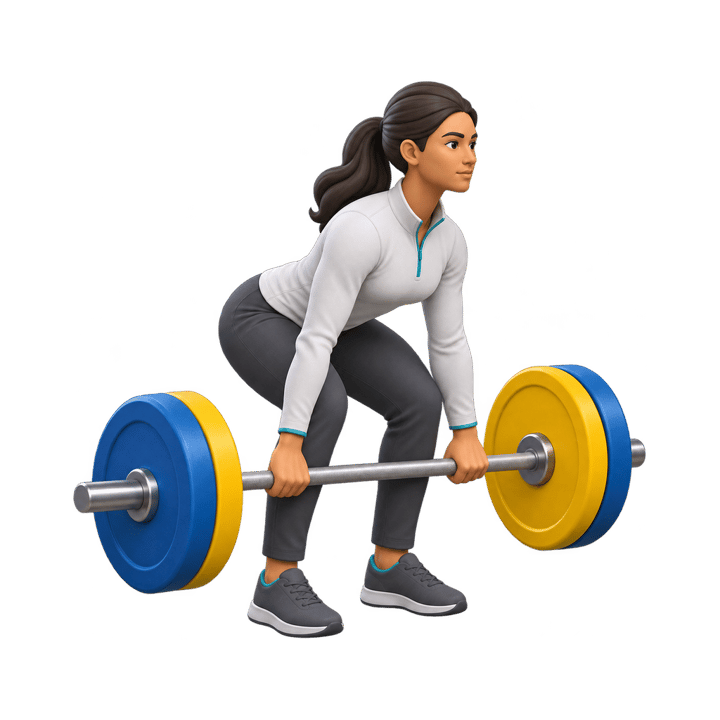
Train your hamstrings twice a week with one hinge and one curl. The hinge is a Romanian deadlift. The curl is a seated leg curl if your gym has one, a lying leg curl if it doesn’t, or sliding leg curls at home. If you sprint or play a sport, add Nordic curls once or twice a week, starting with 2 sets of 3 slow lowers and building up over several weeks. Expect sore hamstrings after the first few Nordic sessions.
The best hamstring exercises
| Exercise | Where | How | Sets and reps |
|---|---|---|---|
| Romanian deadlift | Home or gym | Dumbbells or a barbell, soft knees. Push your hips back and lower the weight down your thighs until your hamstrings are stretched, then stand | 3 sets of 6 to 10 |
| Single-leg Romanian deadlift | Home | A dumbbell in the opposite hand. Hinge on one leg until your body and back leg are level, then stand | 2 to 3 sets of 8 to 12 a leg |
| Seated leg curl | Gym | Sit tall with the pad above your heels. Curl down and back as far as you can, then return slowly | 3 sets of 10 to 15 |
| Lying leg curl | Gym | Face down, hips pressed into the pad. Curl your heels toward your backside without lifting your hips | 3 sets of 10 to 15 |
| Sliding leg curl | Home | On your back with your heels on towels or sliders on a smooth floor. Lift your hips, pull your heels in, then slide them out slowly | 2 to 3 sets of 6 to 12 |
| Nordic curl | Home or gym | Kneel with your ankles held under a couch, a bar or by a partner. Keep a straight line from knees to head and lower yourself toward the floor as slowly as you can. Catch yourself with your hands and push back up | 2 to 3 sets of 3 to 6 |
Sets, reps and how often
The Romanian deadlift is your big lift. That’s 6 to 10 reps for muscle, or 4 to 6 for strength, with 2 to 3 minutes’ rest and each set ending 1 to 3 reps short of failure. Leg curls are small moves at 10 to 15 reps, with 1 to 2 minutes’ rest. Nordics work differently. Each rep is almost all lowering and they’re very hard, so 3 to 6 reps a set is normal, and the slow lowering is the whole exercise.
Two days a week gives most people about 4 to 6 hard sets for the hamstrings, which builds strength and some size. For more size, build toward 10 or more sets a week, counting only your hinges and curls. In a 2023 trial, 9 weeks of squats or hip thrusts barely grew the hamstrings at all.
Common mistakes
- Counting on squats to do it. Squats build your quads and glutes and leave your hamstrings mostly untouched.
- Rounding your back in the Romanian deadlift. Lower only as far as your hips can hinge with a flat back. The stretch should be in the backs of your thighs.
- Dropping fast on Nordics. If you fall from halfway down, shorten the range, or loop a band around your chest and anchor it behind you for help. A fast drop skips the part that does the work.
- Lifting your hips on a lying leg curl. It takes the stretch off the hamstrings and makes the set easier. Keep your hips pressed down.
- Sprinting flat out after a long break. Build your speed over a few weeks. A sudden sharp pain in the back of your thigh during a sprint, or bruising after it, goes to a doctor or physical therapist before you train it again.
A picture from daily life
Think about riding a bike down a steep hill. Pedaling gets you moving, but it’s the brakes that keep you in control, and they take the most strain when you’re going fastest. In a sprint, your hip flexors and quads whip your lower leg forward, and your hamstrings are the brakes that stop it, right at full stretch, a split second before your foot lands. A Nordic curl trains that exact job, a muscle pulling hard while it’s being stretched.
The science: why the seated leg curl builds more
In 2021, researchers had 20 healthy adults train one leg on a seated leg curl and the other leg on a lying leg curl, at 70% of their max, 5 sets of 10, twice a week for 12 weeks. MRI scans at the end showed the whole hamstring group grew 14% in the seated leg against 9% in the lying leg. The extra growth came in the muscles that cross both the hip and the knee, since sitting bends your hip and stretches them before the curl even starts. The short head of the biceps femoris, which only crosses the knee, grew about the same either way.
It was one study of 20 people. But it matches what researchers found for the calves, where the bottom half of the rep, in the stretch, built the most muscle. Training a muscle at long lengths tends to grow more of it. For your hamstrings, that means a seated curl over a lying one when you can, and a Romanian deadlift that goes all the way down to a deep stretch.
8 sources
- Hamstring, Wikipediaen.wikipedia.org
- Schache AG and others, Mechanics of the human hamstring muscles during sprinting, Medicine and Science in Sports and Exercise, 2012europepmc.org
- Ekstrand J, Hagglund M and Walden M, Epidemiology of muscle injuries in professional football (soccer), American Journal of Sports Medicine, 2011europepmc.org
- Ekstrand J, Hagglund M and Walden M, Injury incidence and injury patterns in professional football: the UEFA injury study, British Journal of Sports Medicine, 2011europepmc.org
- Petersen J and others, Preventive effect of eccentric training on acute hamstring injuries in men's soccer: a cluster-randomized controlled trial, American Journal of Sports Medicine, 2011europepmc.org
- van Dyk N, Behan FP and Whiteley R, Including the Nordic hamstring exercise in injury prevention programmes halves the rate of hamstring injuries: a systematic review and meta-analysis of 8459 athletes, British Journal of Sports Medicine, 2019europepmc.org
- Maeo S and others, Greater hamstrings muscle hypertrophy but similar damage protection after training at long versus short muscle lengths, Medicine and Science in Sports and Exercise, 2021pmc.ncbi.nlm.nih.gov
- Plotkin DL and others, Hip thrust and back squat training elicit similar gluteus muscle hypertrophy and transfer similarly to the deadlift, Frontiers in Physiology, 2023pmc.ncbi.nlm.nih.gov