How to build a strong lower back
On this page
The muscles along your lower spine hold you upright all day, and they keep your back firm when you bend over to lift a suitcase, a bag of soil or a child. Train them with hip hinges like the Romanian deadlift, plus back extensions and bird dogs, two or three times a week. For back pain that won’t go away, exercise is one of the best tested treatments there is.
Most people treat the lower back as fragile, something to protect by keeping it still and never loading it. But your back is built to bend and lift, and the muscles that hold it get stronger with training like any others. A review of 249 trials found that exercise eased long-lasting back pain more than no treatment or usual care, and a review of prevention trials found it cut the risk of the next bout.
What your lower back does
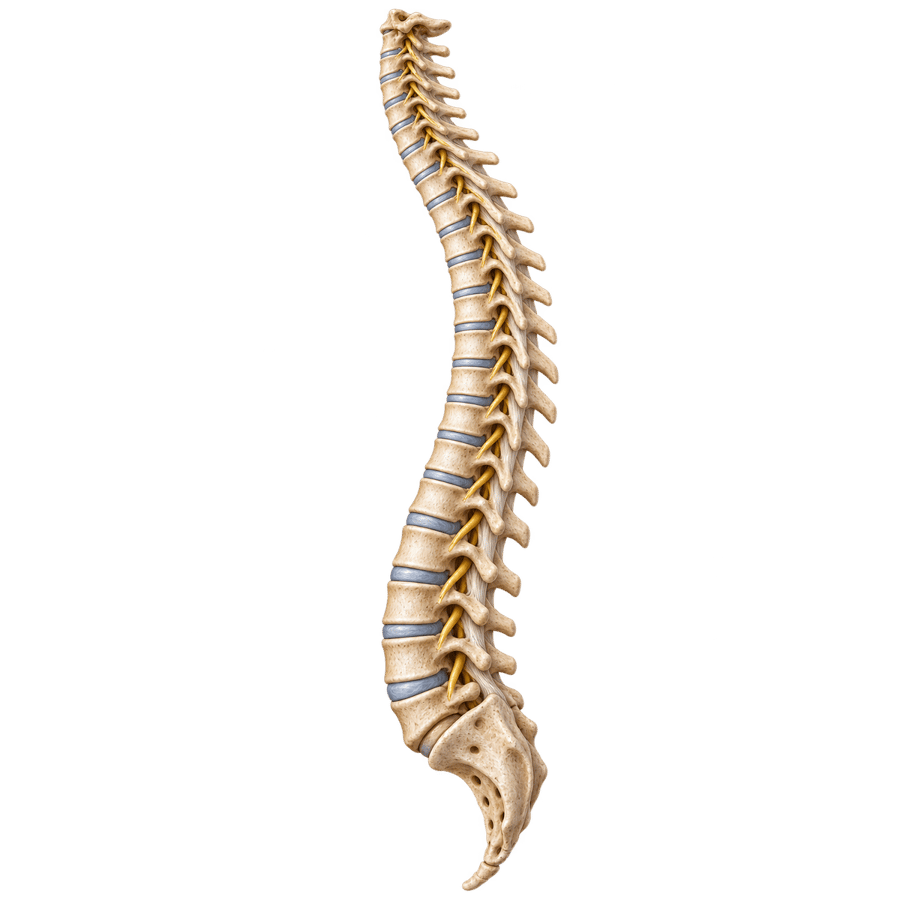
The big muscles of your lower back are the spinal erectors, or erector spinae. They’re two thick columns of muscle, one on each side of your spine, that start on the sacrum (the flat bone at the base of your spine) and the back of your hips and run all the way up to the base of your skull.
When they shorten, they straighten your back and turn it. When you bend forward to tie your shoes, they let you down under control, and then they pull you back up. They work with your glutes to keep you upright when you stand or sit. In a heavy lift, their main job is to hold your spine in one firm piece while your glutes and hamstrings swing your hips, which is why a deadlift trains your back without bending it.
Why you want a strong lower back
Back pain is common, and exercise helps. Low back pain affected about 619 million people around the world in 2020. In 2021, Cochrane researchers pooled 249 trials of exercise for back pain that had lasted more than 12 weeks. Exercise cut pain by about 15 points on a 100-point scale compared with no treatment, usual care or a placebo, which just reached the 15 points the authors had set in advance as a change people would notice. Everyday function improved by about 7 points, short of the 10 they’d set for function. It beat education on its own and came out about the same as hands-on manual therapy. Most trials couldn’t hide from people which treatment they were getting and the results varied a lot, so the authors rated the evidence moderate. The side effects were mostly sore muscles.
It helps keep the next bout away. In 2016, researchers pooled 21 trials with 30,850 people to see what prevents low back pain. Exercise together with education cut the risk of a new episode by about 45%, and exercise alone by about 35%, though the evidence for exercise alone was weaker. Education on its own, back belts and shoe insoles didn’t prevent it at all.
Strong back muscles went with fewer first bouts. In a study published in 1984, the Danish researcher F. Biering-Sørensen examined 928 people aged 30 to 60 in Glostrup, a suburb of Copenhagen, including tests of how strong their trunk muscles were and how long their back muscles could hold out. A year later, 99% of them reported whether they’d had back trouble since. Men whose back muscles had good endurance were less likely to have back trouble for the first time. The study ran for a year and only observed people, so it can’t show the strong muscles prevented the pain, and the link held for men only.
What we’d do
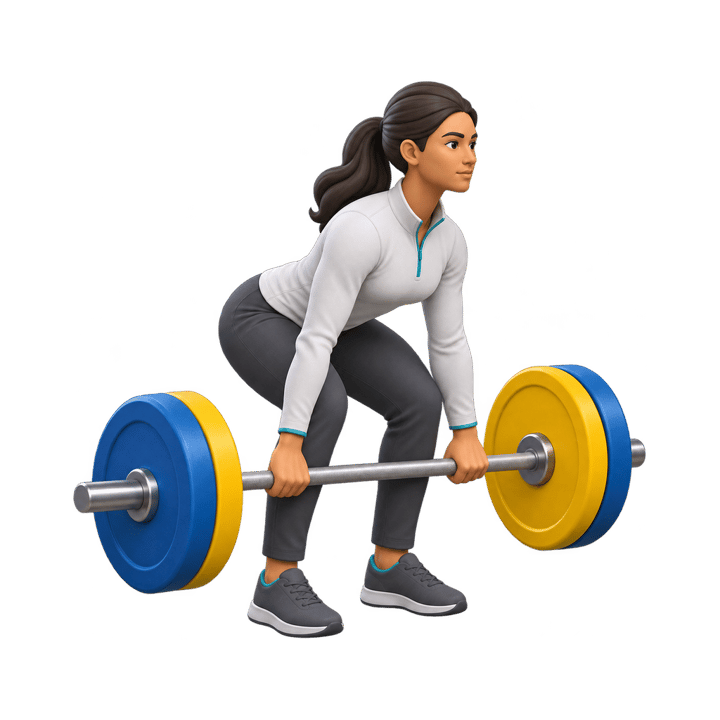
Train your lower back twice a week with one hinge, like a Romanian deadlift or a kettlebell deadlift, and one back move, like back extensions or bird dogs. Push your hips back with a long, flat back until you feel the stretch in your hamstrings, then stand up by squeezing your glutes. If you have the dull, familiar kind of back ache, start light and build up over a few weeks.
The best lower back exercises
| Exercise | Where | How | Sets and reps |
|---|---|---|---|
| Romanian deadlift | Home or gym | Dumbbells or a barbell, soft knees. Push your hips back and slide the weight down your thighs until your hamstrings are stretched, then stand tall | 3 sets of 6 to 10 |
| Kettlebell or trap bar deadlift | Home or gym | The weight between your feet, hips back, flat back. Stand up by pushing the floor away | 3 sets of 5 to 8 |
| Back extension | Gym | Hips on the pad of a 45-degree bench. Hinge down, then lift until your body is in a straight line, and stop there | 2 to 3 sets of 10 to 15 |
| Bird dog | Home | On your hands and knees, reach one arm forward and the opposite leg back until both are level. Hold 2 seconds with your hips square | 2 to 3 sets of 6 to 10 a side |
| Good morning | Home or gym | A band or a light bar across your upper back, soft knees. Hinge forward with a flat back to about 45 degrees, then stand | 2 to 3 sets of 8 to 12 |
| Prone back raise | Home | Face down, arms by your sides. Lift your chest and legs a few inches off the floor and hold | 2 to 3 holds of 10 to 30 seconds |
Sets, reps and how often
Count the hinge as one of your big lifts. That’s 6 to 10 reps if you’re after muscle, or 4 to 6 if strength is the goal, each set ending 1 to 3 reps short of failure, with 2 to 3 minutes’ rest. Back extensions and bird dogs are small moves at 10 to 15 reps (bird dogs 6 to 10 slow reps a side), with 1 to 2 minutes’ rest. Two days a week gives most people 4 to 6 hard sets for the lower back, which builds strength, and your squats, rows and carries add more, since your back holds your spine still under each of them.
If you’re new, or coming back after a bout of back pain, use the first two weeks of the protocol. Do 2 sets with a weight you could lift 10 to 12 times, stopping at 8 to 10, and then go to 3. When every set hits the top of the range with clean form, add the smallest step you have, about 5 to 10 lb (2.5 to 5 kg).
Common mistakes
- Rounding to reach the floor. In a Romanian deadlift, the weight only goes as low as your hips can hinge with a flat back, which for most people is somewhere around mid-shin. Past that, your lower back does the bending.
- Leaning back at the top. Arching past straight at the top of a deadlift or a back extension adds nothing. Stand tall, squeeze your glutes and stop.
- Holding the weight out in front. The farther the load is from your hips, the harder your back has to pull (see the crane below). Keep the bar or dumbbells brushing your legs.
- Training through warning signs. New or severe back pain, pain that runs down your leg, numbness or weakness, or pain after a fall goes to a doctor first.
A picture from daily life
Think about a crane on a building site. Its arm sticks out over the street and lifts a load far from its base, and the cables running along the top of the arm stop it from folding. When you bend over to pick up a box, your upper body is the arm and the box hangs out in front of your hips, and your spinal erectors are the cables. The farther the box is from your body, the harder they have to pull, which is why a box held tight against your stomach feels so much lighter than the same box held at arm’s length.
The science: can people with back pain deadlift?
In 2015, researchers split 70 people with recurring low back pain into two groups for 12 sessions over 8 weeks. One group did gentle exercises to control how they moved, chosen for each person. The other did one heavy lift, the deadlift. Everyone got the same lessons on how pain works.
Both groups had less pain at the end, by about the same amount, and both got stronger. The gentle group improved more on the everyday activities each person had picked as hardest for them (4.2 points against 2.5) and on tests of movement control. It was a small trial in people whose pain came from movement, and it ran for two months. For people with that kind of pain, it means the deadlift doesn’t have to be off the table, and starting light is the way in.
6 sources
- Erector spinae muscles, Wikipediaen.wikipedia.org
- GBD 2021 Low Back Pain Collaborators, Global, regional, and national burden of low back pain, 1990 to 2020, its attributable risk factors, and projections to 2050, The Lancet Rheumatology, 2023pmc.ncbi.nlm.nih.gov
- Hayden JA and others, Exercise therapy for chronic low back pain, Cochrane Database of Systematic Reviews, 2021europepmc.org
- Steffens D and others, Prevention of low back pain: a systematic review and meta-analysis, JAMA Internal Medicine, 2016europepmc.org
- Biering-Sorensen F, Physical measurements as risk indicators for low-back trouble over a one-year period, Spine, 1984europepmc.org
- Aasa B and others, Individualized low-load motor control exercises and education versus a high-load lifting exercise and education to improve activity, pain intensity, and physical performance in patients with low back pain: a randomized controlled trial, Journal of Orthopaedic and Sports Physical Therapy, 2015europepmc.org