Rest, sleep and recovery: when do muscles actually grow?
On this page
Muscle grows in the day or so after you lift, while you work, walk and sleep, so the rest is part of the training. Rest 2 to 3 minutes between sets of the big lifts, give each muscle about two days before you train it hard again, take a lighter week every 6 to 8 weeks, and sleep at least 7 hours. Don’t wait for soreness to fade first.
People get rest wrong in both directions. One camp says more is better, no days off, short rests to keep the heart pumping. The other takes a week off whenever their legs ache. Both feel logical, since hard work feels like it should build more and pain feels like damage. But the building happens after the workout, and soreness has very little to do with it.
What we’d do
Use a timer, 2 to 3 minutes after the big lifts and 1 to 2 after the small moves. Lift two to four days a week, give the same muscles a day or two off, and walk on the days between. Every 6 to 8 weeks, or when you’ve stalled two weeks running, do a lighter week with the same moves and half the sets. Protect your sleep, most of all after a hard session. Train through ordinary soreness, lighter if you need to.
If you remember three things
- Longer rests built more. In an eight-week trial, 3-minute rests between sets built more strength and thigh muscle than 1-minute rests.
- Muscle building peaks a day after you lift. It was up 109% at 24 hours and nearly back to normal by 36.
- Short sleep costs muscle. On a two-week diet, people with 5.5 hours in bed lost 60% more lean mass than with 8.5.
A picture from daily life
Bread dough gets kneaded and then left alone to rise. The kneading builds the structure, and the rise happens while it sits. Punch it down every ten minutes and it never gets there. A workout is the kneading, and your muscles do their rising over the next day and a half, while you’re at work, walking the dog and asleep.
Rest between sets
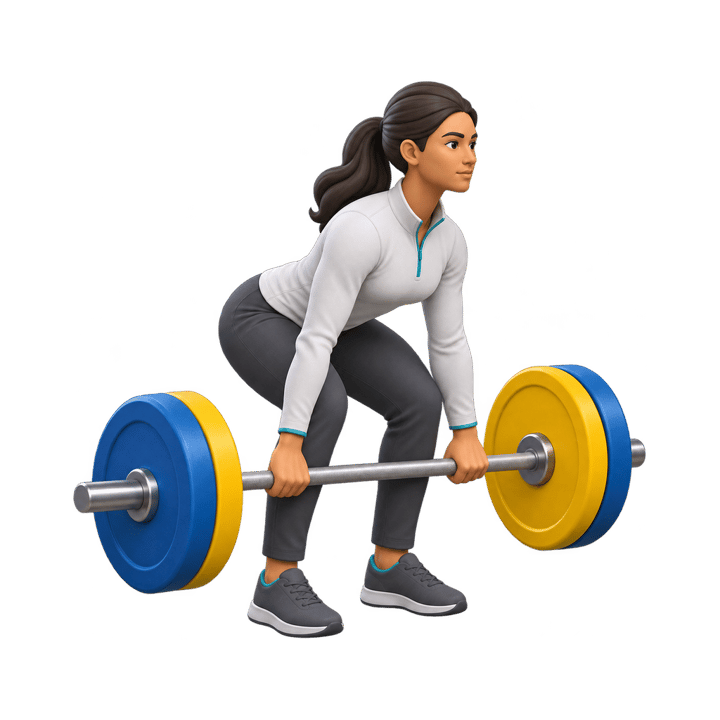
In 2016, Brad Schoenfeld’s team split 21 young men who already lifted into two groups for eight weeks. Both did the same three full-body sessions a week, and one group rested 1 minute between sets and the other 3 minutes. The 3-minute group gained more on their squat and bench press maxes and grew more thigh muscle, likely because longer rests let you lift more in every set after the first.
Across all the research, the results are more mixed. The 2026 American College of Sports Medicine position stand pooled 137 reviews with more than 30,000 people and found rests under or over a minute made no consistent difference to strength, with too little data to say for size. We’d still rest fully on the big lifts, so the later sets stay heavy. How long should I rest between sets?
Days between sessions
Muscle building rises after a hard session and falls back over about a day and a half. In a 1995 study, six young men trained one arm hard and left the other alone. Building in the trained arm was 50% higher at 4 hours and 109% higher at 24 hours, and by 36 hours it was within 14% of the resting arm.
That fits the old Gyroscope muscle guide’s rule of 48 to 72 hours before a muscle works hard again. How often you train it does less than you’d think. A 2018 analysis of 22 studies found that with weekly sets matched, training a muscle more often made no difference to strength, and the 2026 ACSM review found the same for size, from one day a week to more than five, so split the week however suits you.
Here’s a three-day week from the strength protocol, with every muscle getting two or three days between sessions.
| Day | What you do |
|---|---|
| Monday | Full body A |
| Tuesday | Walk |
| Wednesday | Full body B |
| Thursday | Walk, swim or an easy bike ride |
| Friday | Full body C |
| Saturday | A long walk, a hike or a game |
| Sunday | Rest |
On two days a week, Monday and Thursday work well. On four, train your upper body on two days and your lower body on the other two, so each muscle still gets its break.
Lighter weeks
Every 6 to 8 weeks, or when you’ve stalled two weeks running, take a lighter week with the same moves and half the sets. Serious lifters already do this. In a 2024 survey of 246 competitive strength and physique athletes, all of them took lighter weeks, about one every five to six weeks, mostly to manage fatigue, keeping the same exercises with fewer sets and reps.
There are only a few trials. In one from 2024, 39 trained young adults did a nine-week program, and half took the middle week off completely. Their leg muscle grew the same as the group that kept going, but they gained a little less leg strength. The 2026 ACSM review found planned cycles of heavier and lighter weeks made no consistent difference to results. The lighter week is for your joints and your energy, and we’d keep half the sets rather than stop, since a full week off cost some strength.
Sleep and muscle
In three lab studies, short sleep cut muscle building or cost lean mass.
One night awake
13 healthy young adults, Physiological Reports, 2021
Each spent one night with normal sleep and, in another week, one night awake. After the night awake, muscle building after a meal was 18% lower the next afternoon. Cortisol, a stress hormone, was 21% higher and testosterone 24% lower.
It was one night, with no lifting in the study, and building was measured over two hours.
Five short nights
24 young men, Journal of Physiology, 2020
One group had 8 hours in bed for five nights and another had 4. Muscle building fell with short sleep. A third group had 4 hours but did three hard interval workouts, and their muscle building held at normal levels.
It was five nights in young men, and the workouts were intervals on a bike rather than lifting.
Short sleep on a diet
10 overweight adults, Annals of Internal Medicine, 2010
Each dieted for 14 days in a lab twice, once with 8.5 hours in bed and once with 5.5. They lost about 3 kg both times. With short sleep, only 0.6 kg of it was fat, against 1.4 kg with long sleep, and they lost 2.4 kg of lean mass against 1.5, which is 60% more.
It was ten people for two weeks, with no lifting, and lean mass includes water.
The CDC says adults 18 to 60 need 7 or more hours a night, 7 to 9 at 61 to 64 and 7 to 8 from 65. If you lift in the evening, that night’s sleep is part of the session. hrv.guide explains why your HRV can dip after a workout.
Soreness
The ache a day or two after a workout is strongest when a move is new, especially from the lowering part of a lift, which causes more small damage. One session protects you from most of it the next time, which is why soreness fades after the first couple of weeks even as you train harder.
Soreness doesn’t track growth. In a 2016 study, 10 young men lifted for 10 weeks while researchers sampled their thigh muscle. In week one, when muscle damage was highest, muscle building was highest too, but it had no link to who grew. Building only lined up with growth once the damage had faded, in weeks 3 and 10. The idea that soreness means it worked is a myth, and you can train while sore, lighter that day or on other muscles. Should I work out if I’m sore?
Active recovery
Rest days are good walking days, and moving helps soreness, for a while. A 2003 review of muscle soreness found exercise was the most effective way to ease the pain, though the relief wore off, while stretching, ice and ultrasound did nothing for it. The authors suggested people who train daily ease off for a day or two after a session that leaves them very sore, or work the muscles that aren’t sore.
When to see a doctor
Some pain is more than soreness. Sharp pain, pain in a joint, swelling, or pain that gets worse over days needs a doctor or physical therapist. So does severe muscle pain or weakness with dark, red or cola-colored urine after a hard session, which MedlinePlus lists among the signs of rhabdomyolysis, a serious breakdown of muscle that severe exertion can cause.
15 sources
- Schoenfeld BJ and others, Longer interset rest periods enhance muscle strength and hypertrophy in resistance-trained men, Journal of Strength and Conditioning Research, 2016europepmc.org
- Currier BS and others, ACSM position stand: resistance training prescription for muscle function, hypertrophy, and physical performance in healthy adults, Medicine and Science in Sports and Exercise, 2026pmc.ncbi.nlm.nih.gov
- MacDougall JD and others, The time course for elevated muscle protein synthesis following heavy resistance exercise, Canadian Journal of Applied Physiology, 1995europepmc.org
- Gyroscope, Muscle and Strength Guide, part 4, restgyrosco.pe
- Grgic J and others, Effect of resistance training frequency on gains in muscular strength, Sports Medicine, 2018europepmc.org
- Rogerson D and others, Deloading practices in strength and physique sports: a cross-sectional survey, Sports Medicine Open, 2024pmc.ncbi.nlm.nih.gov
- Coleman M and others, Gaining more from doing less? The effects of a one-week deload period during supervised resistance training on muscular adaptations, PeerJ, 2024pmc.ncbi.nlm.nih.gov
- Lamon S and others, The effect of acute sleep deprivation on skeletal muscle protein synthesis and the hormonal environment, Physiological Reports, 2021pmc.ncbi.nlm.nih.gov
- Saner NJ and others, The effect of sleep restriction, with or without high-intensity interval exercise, on myofibrillar protein synthesis in healthy young men, Journal of Physiology, 2020pmc.ncbi.nlm.nih.gov
- Nedeltcheva AV and others, Insufficient sleep undermines dietary efforts to reduce adiposity, Annals of Internal Medicine, 2010pmc.ncbi.nlm.nih.gov
- Centers for Disease Control and Prevention, About sleepcdc.gov
- Damas F and others, Resistance training-induced changes in integrated myofibrillar protein synthesis are related to hypertrophy only after attenuation of muscle damage, Journal of Physiology, 2016europepmc.org
- McHugh MP, Recent advances in the understanding of the repeated bout effect, Scandinavian Journal of Medicine and Science in Sports, 2003europepmc.org
- Cheung K, Hume P and Maxwell L, Delayed onset muscle soreness: treatment strategies and performance factors, Sports Medicine, 2003europepmc.org
- MedlinePlus, Rhabdomyolysismedlineplus.gov