How to build a strong back
On this page
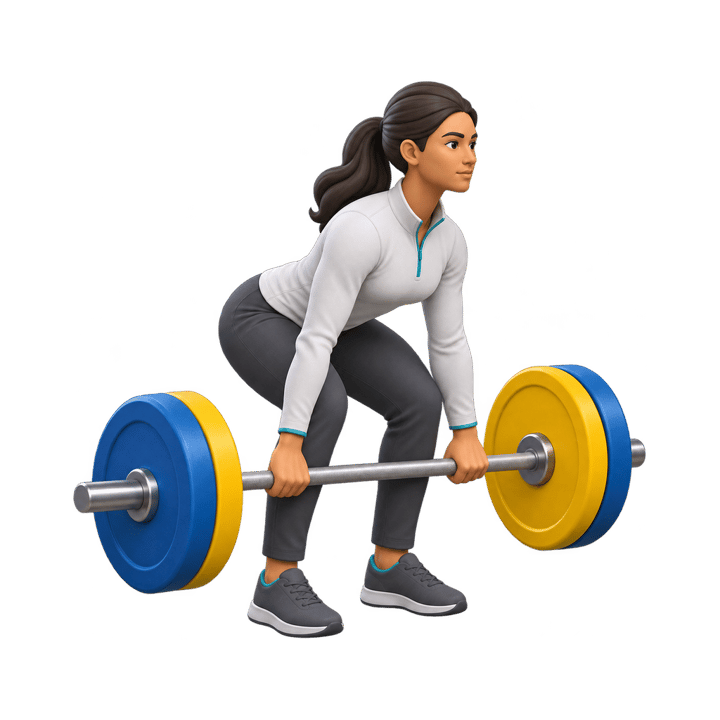
Your back muscles pull things toward you, hold your shoulders back and steady your arms when you carry something heavy. The biggest, your lats, run all the way from your lower spine and pelvis to your upper arms. Train them with rows and pull-ups or pulldowns two or three times a week, 3 sets each, and pull at least as often as you push.
You can’t see your back in the mirror, so it gets less work than the chest and arms. Plenty of people do bench presses and curls for years and barely row. The other belief that holds people back is that back training means pull-ups, and that you can’t start until you can do one. A sturdy table, a band or a dumbbell builds the same muscles, and the first pull-up comes out of that work.
What your back does
Your lats (latissimus dorsi, Latin for the broadest muscle of the back) are two wide, flat sheets that start along your lower spine, the top of your pelvis and your lower ribs, then sweep up and narrow into a tendon on the front of each upper arm bone. They pull your arms down and back toward your body. That’s what pulls you up a ladder, hauls a heavy door open and drags a suitcase off a luggage belt.
Over the top sits the trapezius, a big diamond of muscle running from the back of your skull down to the middle of your back and out to your shoulder blades. The upper part holds up the weight of your arms, and it’s the part that tends to hurt in people who work at a computer all day. The middle part pulls your shoulder blades together, with help from the rhomboids underneath, and the lower part pulls them down. The rear shoulders join in on every row.
All of it works together when you carry something. The traps hold your shoulders up against the load, the muscles between your shoulder blades keep them still, and the lats lock your arms to your sides. Rows load the lats and traps heavily, so they’re the move to build first.
Why you want a strong back
It fixed neck pain that cycling didn’t. In Copenhagen, researchers recruited women from seven workplaces with repetitive jobs like computer work and assembly lines, all with long-term pain in the trapezius at the base of the neck. In the trial, 48 of them were split into three groups for 10 weeks. One did five dumbbell exercises for the neck and shoulders (one-arm rows, shrugs, lateral raises, reverse flyes and upright rows), 20 minutes three times a week. One rode an exercise bike with relaxed shoulders for the same time. One did no exercise. Worst pain in the dumbbell group fell 79%, and it stayed down for 10 weeks after. The cyclists got a small drop right after each ride, and that was all. It was a small trial in women with one kind of muscle pain, but the difference was large.
It can change how you stand. In a 2017 trial, 99 adults aged 60 to 88 with rounded upper backs (a curve of 40 degrees or more) were split into two groups. One did hour-long classes with a physical therapist three times a week for 6 months, strengthening the back muscles with bands and weights and practicing posture. The other went to four health talks. On X-rays, the exercise group’s curve shrank 3 degrees more than the other group’s, about the amount one spine fracture adds in the other direction. They felt better about how they looked. Their walking speed and other physical tests didn’t change.
What we’d do
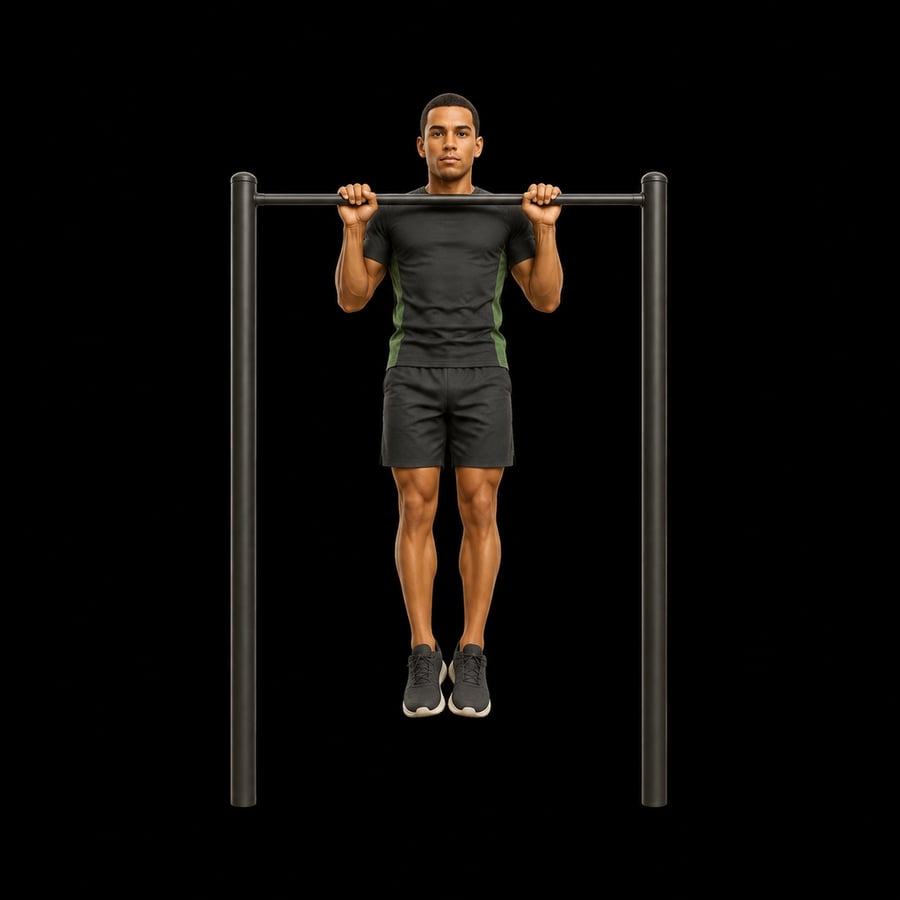
Two or three times a week, do one row and one pull from overhead. Row with one arm and a dumbbell, or under a sturdy table, for 3 sets of 8 to 12. Then do pull-ups, assisted pull-ups or lat pulldowns for 3 sets of 6 to 10. If you can’t do a pull-up yet, hang from a bar for 10 to 30 seconds and practice slow lowering from the top. Do at least as many sets of pulling as pushing every week.
The best back exercises
| Exercise | Where | How | Sets and reps |
|---|---|---|---|
| Table row | Home | Lie under a sturdy table, grab the edge, and pull your chest up to it with your body straight. Bend your knees to make it easier | 3 sets of 6 to 15 |
| Band row | Home | A band looped around a post at chest height. Pull your hands to your ribs and squeeze your shoulder blades together | 3 sets of 12 to 15 |
| One-arm dumbbell row | Home or gym | One hand and knee on a bench, pull the dumbbell toward your hip, lower slowly | 3 sets of 8 to 12 a side |
| Pull-up or chin-up | Home or gym | From a dead hang, pull until your chin clears the bar, then lower to straight arms. Palms facing you (a chin-up) brings in more biceps | 3 sets, stopping a rep or two short |
| Lowering-only pull-up | Home or gym | Jump or step up so your chin is over the bar, then take 3 to 5 seconds to lower yourself | 3 sets of 3 to 5 |
| Lat pulldown | Gym | Pull the bar to your upper chest, driving your elbows down toward your back pockets | 3 sets of 8 to 12 |
| Seated cable row | Gym | Sit tall and pull the handle to your belly, shoulder blades together at the end | 3 sets of 8 to 12 |
| Reverse fly | Home or gym | Hinge forward with light dumbbells and sweep your arms out wide | 2 to 3 sets of 12 to 15 |
Your first pull-up
- Hang. Build a dead hang toward 45 seconds, since every pull-up starts from one. How long should I be able to hang?
- Row. Table rows twice a week, lowering your feet a little as they get easier until your body’s nearly flat.
- Lower. Start your sets from the top and take 3 to 5 seconds to come down. The 2026 American College of Sports Medicine review found lowering under load built more muscle.
- Get help. A band looped over the bar, or a foot on a box, takes off part of your weight while you pull.
- Test. Every few weeks, try one strict rep from straight arms. On Gyroscope’s training bands, 1 to 4 is Developing and 5 to 9 is Solid. How many pull-ups should I be able to do?
Sets, reps and how often
Rows, pull-ups and pulldowns count as big lifts. Do 4 to 6 reps for strength, 6 to 10 for muscle or 5 to 8 for both, with 2 to 3 minutes of rest, and end every set 1 to 3 reps short of failure. Reverse flyes and band rows are small moves, 10 to 15 reps with 1 to 2 minutes of rest.
Two full-body days give most people 4 to 6 hard sets for the back each week, which builds strength and some size. The 2026 review found 10 or more hard sets a week built the most muscle, flattening out around 18 to 20. When every set hits the top of the range, add about 5 lb (2.5 kg) to rows and pulldowns. With pull-ups, add reps, then move from the band to strict reps, then hold a dumbbell between your feet.
Common mistakes
- Pulling with your arms. If your biceps are doing all of it, start each rep by drawing your shoulder blades back and down, then bend your elbows.
- Shrugging up to your ears. Keep your neck long on rows and pulldowns. The traps get their own work on carries and shrugs.
- Half pull-ups. Count a rep only from straight arms to chin over the bar, with no swinging. A kipping rep uses your hips and doesn’t train the same thing.
- Rounding your lower back on bent-over rows. Put a hand on a bench to take the load off, and give your lower back its own work. How to build a strong lower back.
- Pushing more than you pull. If your week has three pressing moves and one row, add rows until the sets match. Why balanced, not just bench.
- Training through nerve pain. Pain, tingling or numbness that runs down your arm goes to a doctor or physical therapist before you load it.
A picture from daily life
Rowing a boat is the clearest picture of what your back does. You reach forward, grip the oars, then pull the handles in to your ribs while your shoulder blades squeeze together behind you. A row at the gym is that same pull. A pull-up is the same muscles pulling from overhead, the way you’d climb a rope.
The science: women and the upper body
A 2020 review pooled studies where women and men did the same lifting program. Across 17 studies of upper-body strength, women gained more relative to where they started than men did, and across 10 studies of muscle size, the two grew by similar shares. The researchers think untrained women may have more room to gain upper-body strength, though the studies were short. Women usually start with fewer pull-ups, and in these studies the gap narrowed with training.
8 sources
- Latissimus dorsi muscle, Wikipediaen.wikipedia.org
- Trapezius muscle, Wikipediaen.wikipedia.org
- Andersen LL and others, Effect of two contrasting types of physical exercise on chronic neck muscle pain, Arthritis and Rheumatism, 2008europepmc.org
- Specific strength training relieves chronic neck muscle pain (report of Andersen 2008, exercises and results), Rehab Management, 2008rehabpub.com
- Katzman WB and others, Targeted spine strengthening exercise and posture training program to reduce hyperkyphosis in older adults: results from the SHEAF randomized controlled trial, Osteoporosis International, 2017pmc.ncbi.nlm.nih.gov
- Gyroscope, Pull-ups benchmark, practical bands and protocolgyrosco.pe
- Roberts BM, Nuckols G and Krieger JW, Sex differences in resistance training: a systematic review and meta-analysis, Journal of Strength and Conditioning Research, 2020europepmc.org
- Currier BS and others, ACSM position stand: resistance training prescription for muscle function, hypertrophy, and physical performance in healthy adults, Medicine and Science in Sports and Exercise, 2026pmc.ncbi.nlm.nih.gov