
Can you get up off the floor?
Sit down to the floor, legs crossed, then stand back up, using as little help as you can. Tap each support you used. It takes a minute, and it's the test people send to their parents.
Do it on a rug or mat with a sturdy chair or wall beside you. Skip it after a recent fall or a hip, knee or back injury, and ask your doctor first.
Sitting down
Tap each support you used. Tap one below to take it back.
5 out of 5
Standing up
Tap each support you used. Tap one below to take it back.
5 out of 5
What your score means
Your score shows what your legs, balance and hips can do together, and each point you lost is one support you needed. In the 2025 study, the groups with lower scores had more deaths over about 12 years. That was measured once, in groups, and nobody has shown that raising your own score adds years. But every support is something you can train away.
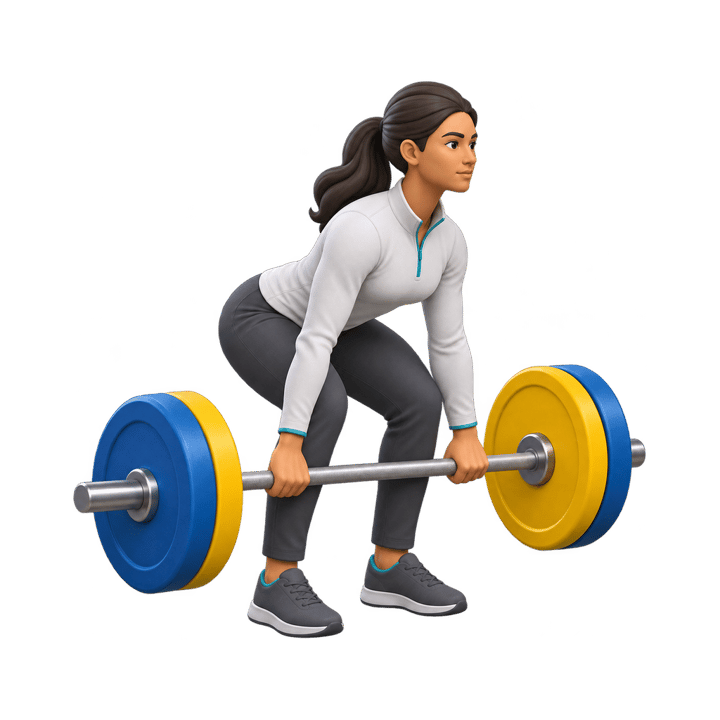
Practice the move itself two or three times a week, with the drills under your score, and add split squats and step-ups to your lifting. Score it again in eight weeks. If getting up was hard or you couldn't, start by standing up from a chair without your hands, and mention it to your doctor at your next visit.
How it's scored
Sitting down and standing up are each worth 5. Every hand, forearm, knee or side of a leg you put down costs a point, and a wobble costs half. A clean sit and stand is a perfect 10. It checks leg strength, balance and how far your hips and ankles bend, all at once. The same scoring runs lifespan.guide's floor test.
What the studies found
Claudio Gil Araujo's clinic in Rio de Janeiro scores its patients on this test. In the 2025 report, 4,282 adults aged 46 to 75 were followed for a median of 12.3 years, and the lower the score, the larger the share who died.
| Score | Died over about 12 years |
|---|---|
| 10 | 3.7% |
| 8.5 to 9.5 | 7% |
| 8 | 11.1% |
| 4.5 to 7.5 | 20.4% |
| 0 to 4 | 42.1% |
The first study, in 2,002 adults aged 51 to 80, found each extra point went with 21% lower mortality (Brito 2014). These are snapshots of groups, taken once. Nobody has shown yet that raising your own score adds years, but what it needs (strong legs, balance, loose hips) is what gets you out of a chair and up the stairs, and all of it improves within weeks of practice.
More on the sit-to-stand test, or score it beside your other tests in How strong am I?
3 sources
- Araujo CGS and others, sitting-rising test and natural and cardiovascular death in 4,282 adults, European Journal of Preventive Cardiology, 2025europepmc.org
- Brito LBB and others, Ability to sit and rise from the floor as a predictor of all-cause mortality, European Journal of Preventive Cardiology, 2014news-medical.net
- Sitting-rising test, scoring detailsen.wikipedia.org