Should I work out if I'm still sore?
On this page
Yes, lightly, or train the muscles that aren’t sore. Moving eases soreness for a while. Soreness mostly means the move was new, and it fades after your first few weeks. See a doctor if the pain lasts more than three days, a muscle swells, or your urine turns dark.
People treat soreness two opposite ways. Some chase it, because a workout that leaves you hobbling down the stairs feels like it must have worked. Others take it as a warning and rest until every ache is gone, which can mean a week off after one session. Both can end up missing sessions, and both make too much of an ache that mostly tells you something was new.
What we’d do
Keep your sessions on schedule. If a muscle is still sore, go lighter on it or train a different part of the body that day. Bring new moves in gradually over a week or two, so the first sessions don’t flatten you. Judge a workout by whether the weights went up over the weeks, never by how sore you were the next day.
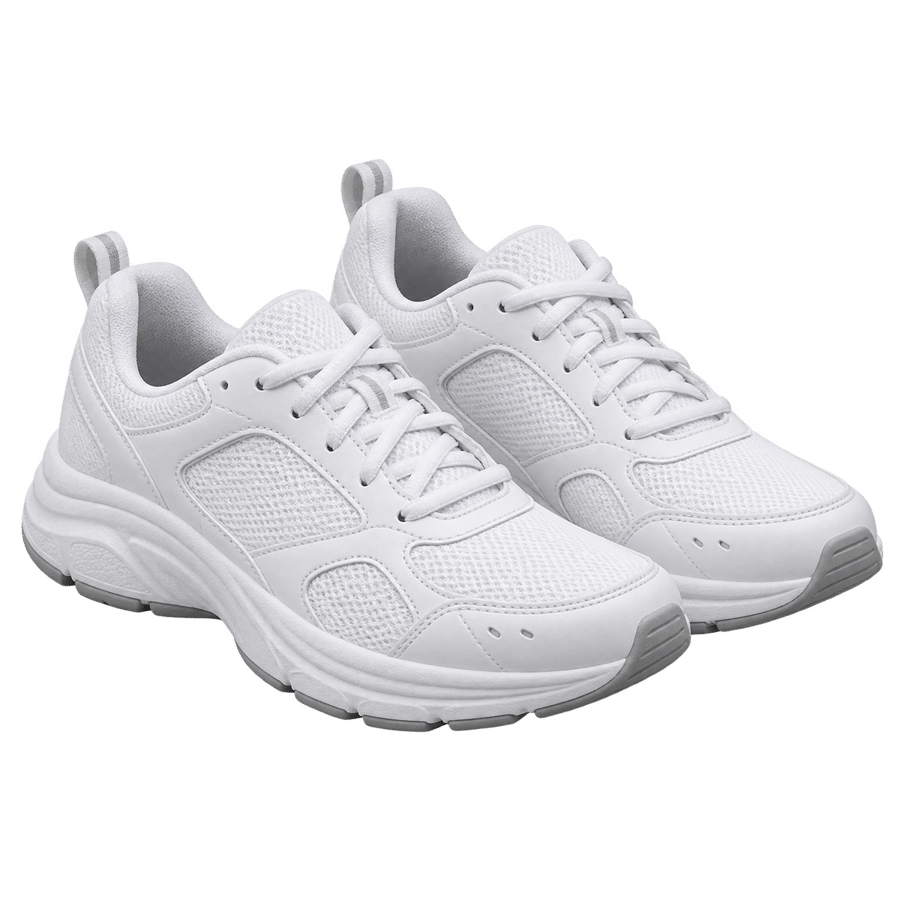
It’s like new shoes
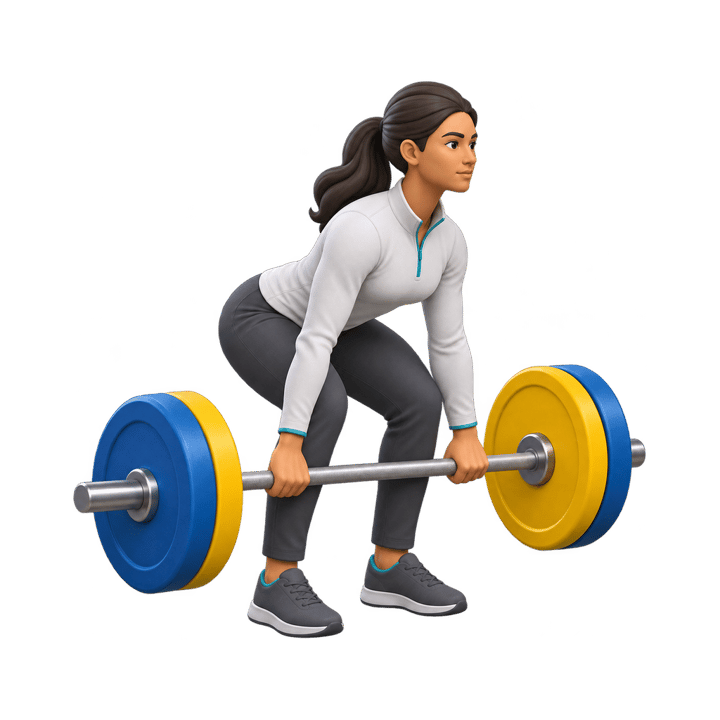
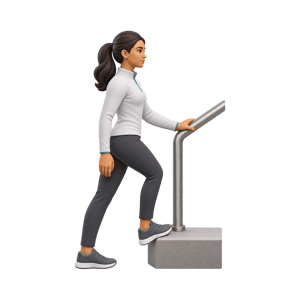
Soreness is like the stiffness of new shoes. It comes from the newness more than the distance, and once your feet are used to them, the same walk stops hurting. A move you’ve never done, especially one where you lower a heavy weight slowly, leaves you sore. The same move a few weeks later barely does.
A 2003 review of the research on soreness found it’s most common at the start of a season and when people try something new, and that movements that lower a load cause more of the small muscle damage behind it.
Soreness is repair, and growth comes later
A clear look at what soreness means came from Felipe Damas and his colleagues in 2016. They took muscle samples from 10 young men over 10 weeks of training.
Week one went to repair
10 young men, 10 weeks of training, muscle samples throughout. Damas and others, Journal of Physiology, 2016
Muscle building was highest in week one, when the damage was highest, but it wasn’t linked to how much the muscle grew. It only lined up with growth at weeks 3 and 10, once the damage had faded.
A small study in young men. It suggests the first weeks go to patching damage before the body starts adding muscle.
That’s why chasing soreness backfires. A workout that leaves you wrecked spends more of your body’s effort on repair, and the growth comes once the sessions stop feeling new.
Week 1is repair
Muscle building only tracked growth once the soreness had faded, at weeks 3 and 10 (Damas, 2016).
1 to 2weeks to ease in
Bringing new or heavy-lowering moves in gradually eased the drop in performance after them, a 2003 review found.
3 daysis the limit
Muscle pain lasting longer than that is a reason to contact a doctor (MedlinePlus).
What eases it
| What people try | What the 2003 review found |
|---|---|
| Light exercise | The most effective relief, though it wears off after a while |
| Lighter training for 1 to 2 days, or training other muscles | Helps you recover |
| Easing new moves in over 1 to 2 weeks | A smaller drop in performance afterward |
| Pain relievers like ibuprofen | Some relief, depending on the dose |
| Massage | Mixed results |
| Stretching, ice and cold | No effect |
When it isn’t ordinary soreness
Ordinary soreness fades on its own. The US National Library of Medicine says to contact a doctor if muscle pain lasts more than three days, if the pain is severe and unexplained, or if there’s swelling or redness around the muscle. Dark, red or cola-colored urine after a hard session is a sign of muscle breakdown (rhabdomyolysis), which severe exertion can cause. Call your doctor if you see it.
If your watch shows a low HRV the morning after a hard session, hrv.guide explains it in why is my HRV low after a workout?
4 sources
- Damas F and others, Resistance training-induced changes in integrated myofibrillar protein synthesis are related to hypertrophy only after attenuation of muscle damage, Journal of Physiology, 2016europepmc.org
- Cheung K, Hume P and Maxwell L, Delayed onset muscle soreness: treatment strategies and performance factors, Sports Medicine, 2003europepmc.org
- MedlinePlus, Muscle aches, US National Library of Medicinemedlineplus.gov
- MedlinePlus, Rhabdomyolysis, US National Library of Medicinemedlineplus.gov