How do you build stronger bones?
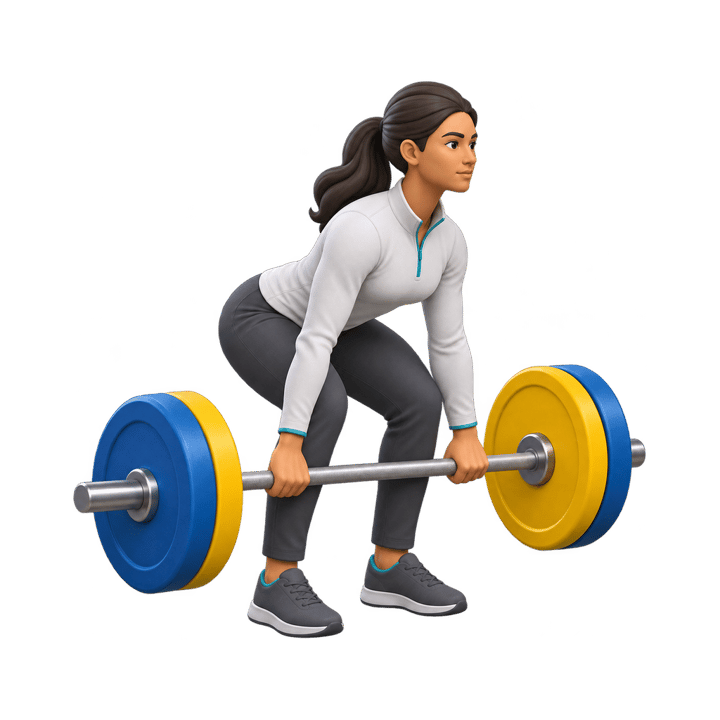
Heavy lifting, with some jumping and landing. In a trial of women around 65 with low bone mass, heavy supervised lifting twice a week for eight months raised spine density 2.9%. A gentle home program kept the other women moving, and their spines lost 1.2%.
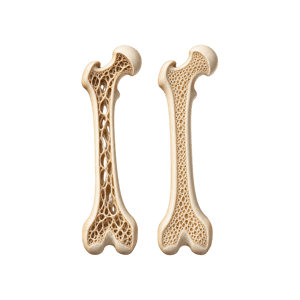
Most people with thinning bones hear the same advice. Be careful, walk, do some light exercise, and don’t lift anything heavy. It sounds sensible, since a fragile bone seems like the last thing you’d want to load. A team of researchers tested the opposite in the LIFTMOR trial, with women whose bones were already thin, and the heavy group came out ahead on bone density and on every function test.
What we’d do
If you’re a woman over 45, or anyone told your bones are thinning, lift heavy twice a week with the big moves (a squat, a hinge and a press), built up over weeks to sets of five that are hard. Start with a coach, the way the trial did, and add some jumping or landing work if your joints allow it. If you’ve been diagnosed with osteoporosis, get cleared by your doctor first.
The LIFTMOR trial
LIFTMOR took 101 women past menopause, average age 65, all with low bone mass. Forty-nine of them did 30-minute sessions twice a week for eight months, supervised, with five sets of five at more than 85% of their max plus impact work. The other 52 did a low-intensity program at home.
Heavy lifting at 65
101 postmenopausal women with low bone mass, average age 65, eight months. Watson and others, Journal of Bone and Mineral Research, 2018
Spine density rose 2.9% in the heavy group and fell 1.2% in the home group. At the hip (the femoral neck), it rose 0.3% against a 1.9% drop. The heavy group also did better on the function tests.
The sessions were closely supervised, and the women came to 92% of them. One minor back spasm was the only injury reported.
| Measure | Heavy lifting and impact | Gentle home program |
|---|---|---|
| Spine density | +2.9% | -1.2% |
| Hip (femoral neck) density | +0.3% | -1.9% |
| Sessions done | 92% | 85% |
The home group exercised too, at a low intensity, and their bones kept thinning anyway.
+2.9%spine density
Heavy lifting twice a week for eight months, in women about 65 with low bone mass (LIFTMOR, 2018).
30 mintwice a week
Two supervised half-hour sessions a week was the whole dose in the trial.
88%of broken hips
The share of hip fracture hospital visits in older US adults that come from a fall (CDC).
How bone answers a load
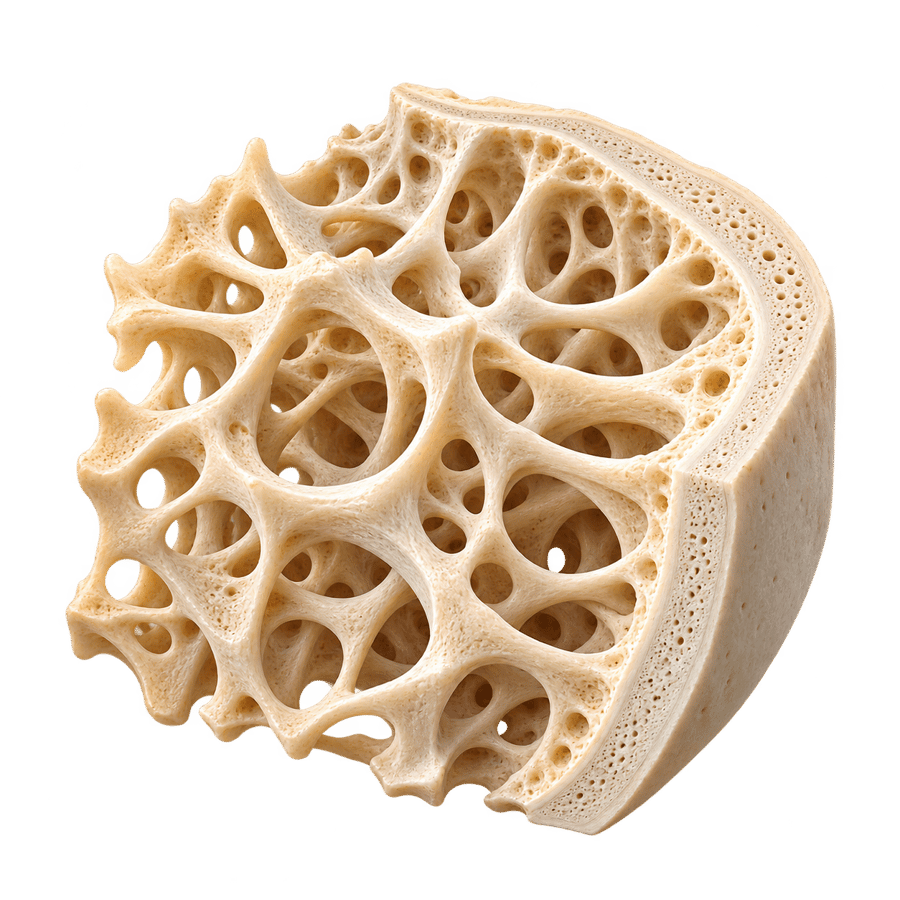
Bone works like a road crew that repairs the roads people drive on. Load a bone hard and it gets reinforced where the load runs. Barely use it and the crew stops showing up. A heavy squat or a jump asks a lot more of a bone than an easy walk does, and that bigger load is what the trial gave the women.
Strength protects bones twice
Denser bone helps, and so does staying on your feet. More than one in four US adults 65 and older fall each year, and about 319,000 older adults are hospitalized for a broken hip every year, 88% of them after a fall. Strong legs and good balance keep you off the floor, so test your one-foot balance and practice it daily next to a counter.
Where to start
For adults the plan is the same as any strength plan, with the loads at the heavy end. The quiz gives women 45 and up a bones block with their first two weeks, and the scorecard tracks the strength behind it.
Kids and teens build bone too. The US guidelines ask everyone aged 6 to 17 for activities that make their muscles and bones strong, like climbing on playground equipment, basketball and jumping rope. For teens who want to lift, see is it safe for teenagers to lift weights?
3 sources
- Watson SL and others, High-intensity resistance and impact training improves bone mineral density and physical function in postmenopausal women with osteopenia and osteoporosis: the LIFTMOR randomized controlled trial, Journal of Bone and Mineral Research, 2018europepmc.org
- Centers for Disease Control and Prevention, Older adult falls datacdc.gov
- US Office of Disease Prevention and Health Promotion, Physical Activity Guidelines for Americans, top 10 things to knowodphp.health.gov