Squats are bad for your knees
Short answerNot the way you think
On this page
Not the way you think. Deep squats done with learned form load the knee less than people fear. A 2013 review of more than 164 articles found the worries about deep squats wearing out knees unfounded, and suggested heavy half and quarter squats may load the knees and spine more. Poor form and big jumps in weight are what cause trouble.
What we’d do
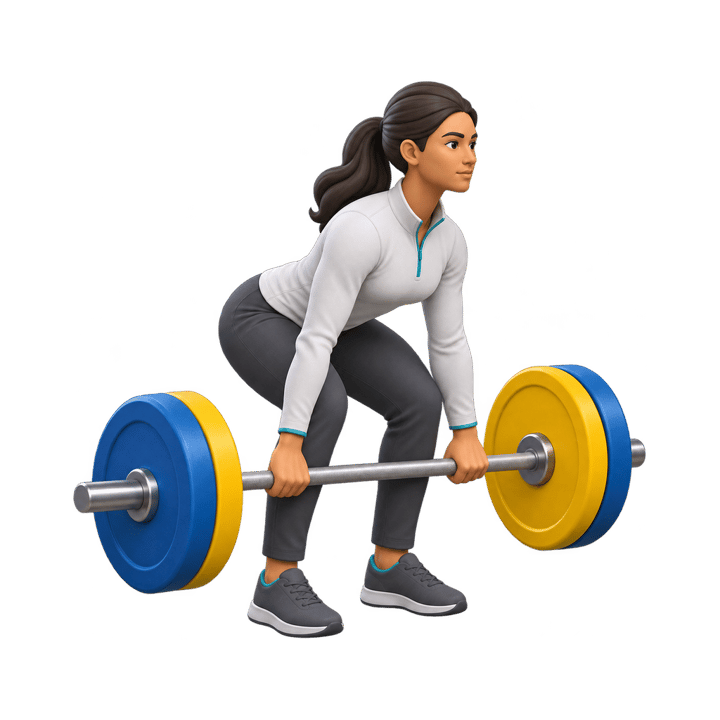
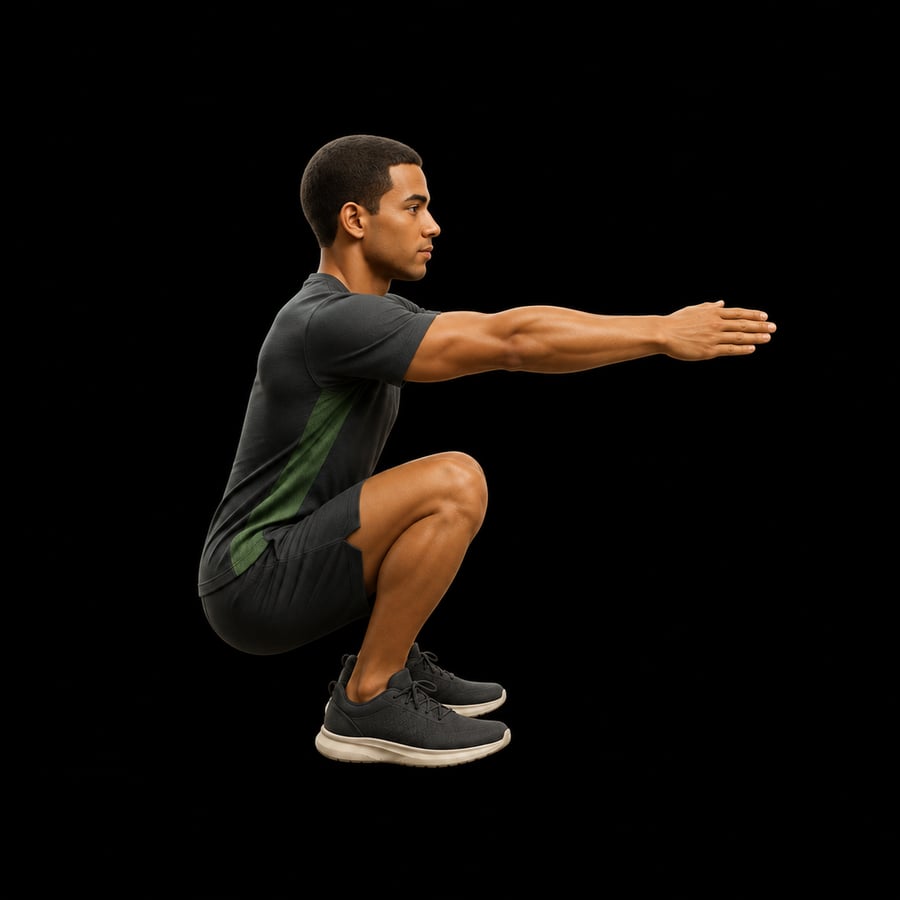
Squat as deep as you can with a flat back and your heels down, which for most people is thighs level with the knees or lower. Learn with a goblet squat or by sitting back to a bench, and add weight in small steps. Let your knees travel forward over your toes, since that’s how a squat is built. If a knee is sore, squat to a bench and do step-ups instead, and stop on any sharp pain.
If you remember three things
- Deeper isn’t worse. Pressure behind the kneecap peaked near a right angle and spread out as the knee bent further.
- Heavy partial squats are the bigger worry. The 2013 review flagged half and quarter squats with near-max loads.
- Knees past toes is normal. Holding the knees back cut knee torque 22% and raised hip torque about tenfold.
Why it seems true
Lots of people have sore knees, and a squat puts the knee through its biggest bend of the day, under weight. It looks hard on the joint. For years gym rules said to stop at a right angle and never let your knees go past your toes, and a rule that specific sounds like it must be protecting you from something.
A picture from daily life
Carry a heavy shopping bag by a thin string and it cuts into your fingers. Carry the same bag by a wide strap and it’s fine. The weight didn’t change, and it’s spread over more of your hand.
A deep squat does something like that inside the knee. As the knee bends past a right angle, the tendon above the kneecap wraps around the end of the thigh bone and takes up part of the load, so the force is spread over a bigger area.
What the review found
In 2013 three researchers went through more than 164 articles on squat depth, knee forces and injuries. Here’s what they concluded.
- The pressure behind the kneecap peaks at about a right angle, 90 degrees of bend.
- Bending deeper brings in the wrapping effect, which spreads the load more evenly and lowers the pressure on the cartilage.
- Fears that deep squats cause wear, cartilage damage or arthritis in the knee were unfounded.
- Half and quarter squats with near-maximal loads may do more long-term harm to the knees and spine, since people can load the bar far heavier when they only go part way down.
- Deep squats with proper technique, taught under supervision and loaded progressively, protect against injury and build the legs well.
It’s a review of lab measurements, cadaver studies and models, and nobody has run a long trial counting knee injuries in deep against shallow squatters. There are no good estimates yet of knee forces past about 50 degrees of bend in a deep squat. But the evidence that exists all points the same way.
The 2026 American College of Sports Medicine review adds one more reason to go deep. Lifting through a full range of motion was on its short list of what raised strength most.
Knees past your toes
In 2003 researchers had seven experienced lifters squat two ways, once normally and once with a board stopping their knees from going past their toes.
| Knees free | Knees held back | |
|---|---|---|
| Torque at the knee | 150 N·m | 117 N·m |
| Torque at the hip | 28 N·m | 303 N·m |
Holding the knees back did take about 22% off the knee. But to stay balanced the lifters had to lean far forward, and the load at the hip and lower back rose about tenfold. The rule moved the strain from the knees to the hips and lower back.
What does cause knee trouble
- Piling on weight too fast. Add the smallest step once every set hits its reps. How to keep getting stronger.
- Heavy partial reps. A big load with a short dip, which the 2013 review flagged.
- Knees caving in. Keep your knees pointing the same way as your toes.
- Squatting through sharp pain. Pain is a signal to change the move.
My knees hurt when I squat
The fair point
Some knees do hurt. If yours aches every time you go deep, telling you squats are safe doesn’t help.
What we’d do
Change the squat and keep training the legs. Squat down to a bench or box at a height that doesn’t hurt, use step-ups, and lower the box over weeks as it allows. New or sharp pain, swelling, or a knee that locks or gives way goes to a doctor or physical therapist first.
3 sources
- Hartmann H, Wirth K and Klusemann M, Analysis of the load on the knee joint and vertebral column with changes in squatting depth and weight load, Sports Medicine, 2013europepmc.org
- Fry AC, Smith JC and Schilling BK, Effect of knee position on hip and knee torques during the barbell squat, Journal of Strength and Conditioning Research, 2003europepmc.org
- Currier BS and others, ACSM position stand: resistance training prescription for muscle function, hypertrophy, and physical performance in healthy adults, Medicine and Science in Sports and Exercise, 2026pmc.ncbi.nlm.nih.gov