Is it safe to lift weights over 60?
On this page
Yes, and over 60 is when lifting does the most for you. Start lighter than you think, take a longer warm-up, skip one-rep max tests and practice your balance every day. If you have heart disease or high blood pressure, ask your doctor before you add heavy lifting.
Most people picture lifting at 70 as a good way to get hurt. A strained back, a fall in the gym, a heart attack under a heavy bar. Losing strength looks like a normal part of getting older, so it seems smarter to protect what’s left than to push it. That gets the risk backward, because the danger that grows with age is weakness, and strength is one of the things that comes back quickly, even in your 90s.
What we’d do
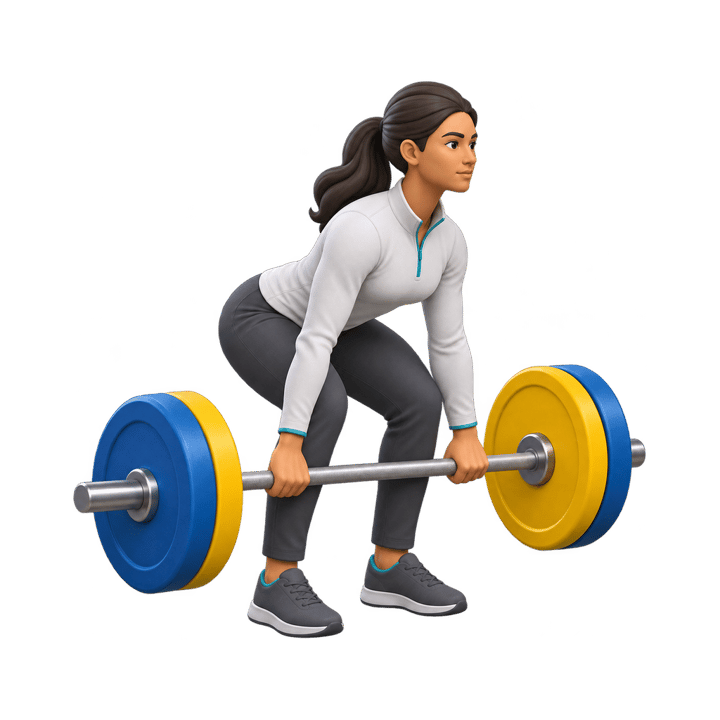
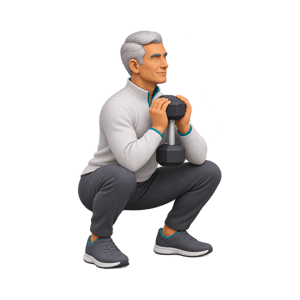
Lift twice a week, every big muscle, with a weight you could lift 10 to 12 times, stopping two or three reps short. Warm up with a few light sets of each move. Stand on one foot next to the kitchen counter every day. Test yourself with the 30-second chair stand and a one-foot hold instead of a max lift, and test again every eight weeks.
What the oldest lifters showed
In 1990, Maria Fiatarone and her colleagues took ten frail nursing home residents, aged about 90, and had them lift heavy with their legs for eight weeks. Nine finished. Their leg strength went up 174% on average, their thigh muscle grew 9%, and they walked 48% faster heel to toe.
Four years later the same team ran a randomized trial, with 100 frail nursing home residents aged 72 to 98.
Ten weeks at 87
100 frail nursing home residents, average age 87, randomized, 10 weeks. Fiatarone and others, New England Journal of Medicine, 1994
Strength rose 113% in the people who trained, against 3% in those who didn’t. Their stair-climbing power rose 28%, against about 4%.
A nutrition supplement, tested on its own in the same trial, did nothing for any of the main results.
The American College of Sports Medicine’s 2026 position stand, built on 137 reviews, says lifting is safe for healthy adults of all ages, and asks healthy adults for hard sessions on at least two days a week.
174%stronger at about 90
Nine nursing home residents after eight weeks of heavy leg training (Fiatarone, 1990).
113%against 3%
Strength gained in ten weeks by trained and untrained residents with an average age of 87.
1 in 4adults 65 and up
More than one in four older US adults fall each year, about 4.5 million emergency visits (CDC).
Weakness is the risky part
Strength at 70 is the difference between carrying the groceries in from the car in one trip or three, and between getting up off a low couch in one go or rocking forward twice.
Strength drops quickly at that age. In 1,880 people in their 70s followed for three years, leg strength fell 2.6% to 4.1% a year, about three times faster than leg muscle shrank. That’s the strength you catch yourself with when you trip. About 319,000 older adults are hospitalized for a broken hip every year in the US, and 88% of those breaks come from a fall.
Test yourself the safe way
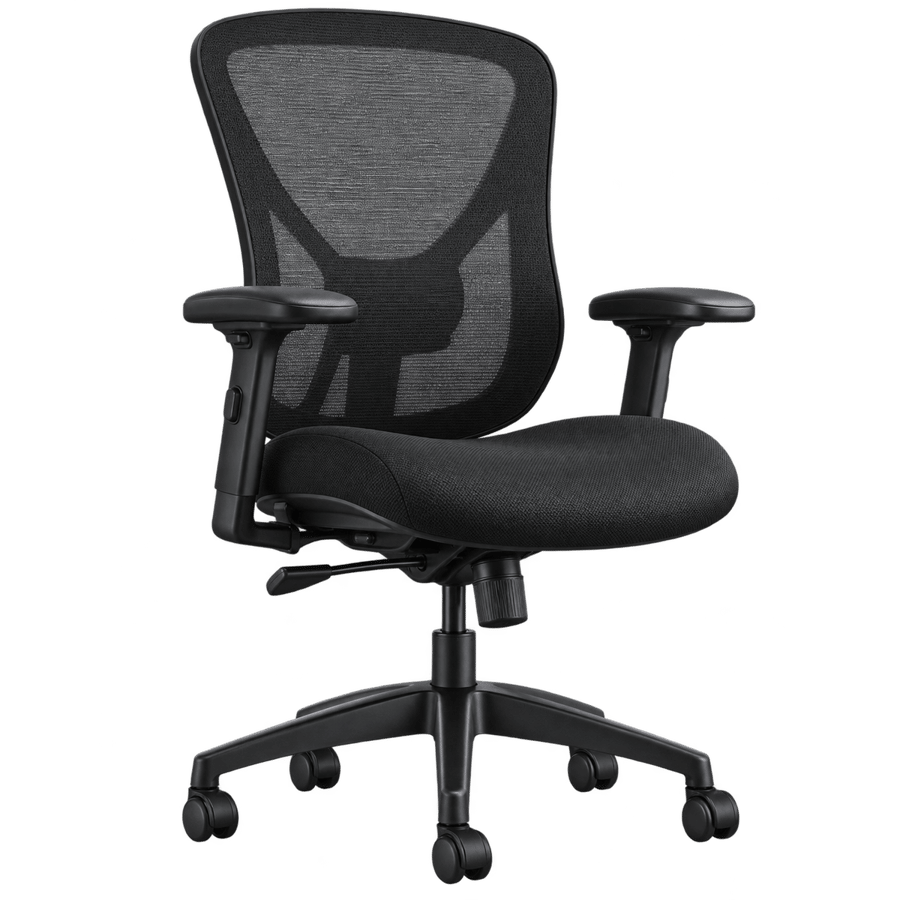
The chair stand is CDC’s own test for older adults. Sit in the middle of a straight-backed chair with a 17-inch seat, arms crossed over your chest, and count how many times you stand all the way up in 30 seconds. If you need your arms, stop. A score under these is below average for your age, which CDC counts as a fall risk.
| Age | Men, below average under | Women, below average under |
|---|---|---|
| 60 to 64 | 14 | 12 |
| 65 to 69 | 12 | 11 |
| 70 to 74 | 12 | 10 |
| 75 to 79 | 11 | 10 |
| 80 to 84 | 10 | 9 |
| 85 to 89 | 8 | 8 |
| 90 to 94 | 7 | 4 |
Put a sturdy chair against a wall and have someone stand next to you the first time. The How strong am I? scorecard adds the chair stand for anyone 60 and up, and the test timer counts the stands for you. Add the one-foot balance test, since balance and leg strength work together when you stumble.
Who should check with a doctor first
The American College of Sports Medicine screens people on three things: how active you are now, whether you have symptoms or known heart, metabolic or kidney disease, and how hard you plan to train. If you have heart disease or high blood pressure, ask your doctor before you add heavy lifting, and bring this page. Blood pressure has its own list of things that lower it. Any new or sharp pain, swelling or numbness in a joint goes to a doctor or physical therapist before you load it again.
7 sources
- Currier BS and others, ACSM position stand on resistance training, Medicine and Science in Sports and Exercise, 2026pmc.ncbi.nlm.nih.gov
- Fiatarone MA and others, High-intensity strength training in nonagenarians, JAMA, 1990europepmc.org
- Fiatarone MA and others, Exercise training and nutritional supplementation for physical frailty in very elderly people, New England Journal of Medicine, 1994europepmc.org
- Goodpaster BH and others, The loss of skeletal muscle strength, mass, and quality in older adults: the Health, Aging and Body Composition Study, Journals of Gerontology, 2006europepmc.org
- Centers for Disease Control and Prevention, Older adult falls datacdc.gov
- Centers for Disease Control and Prevention, STEADI 30-Second Chair Stand assessment, 2017nj.gov
- Riebe D and others, Updating ACSM's recommendations for exercise preparticipation health screening, Medicine and Science in Sports and Exercise, 2015europepmc.org