It's too late to start lifting at 70
Short answerNo
On this page
No. In 1990, nursing home residents aged about 90 nearly tripled their leg strength in eight weeks of heavy lifting. In a bigger trial, residents with an average age of 87 more than doubled theirs in ten. Strength is the part of aging that comes back fastest, and the older you are, the more each bit of it does for your daily life.
What we’d do
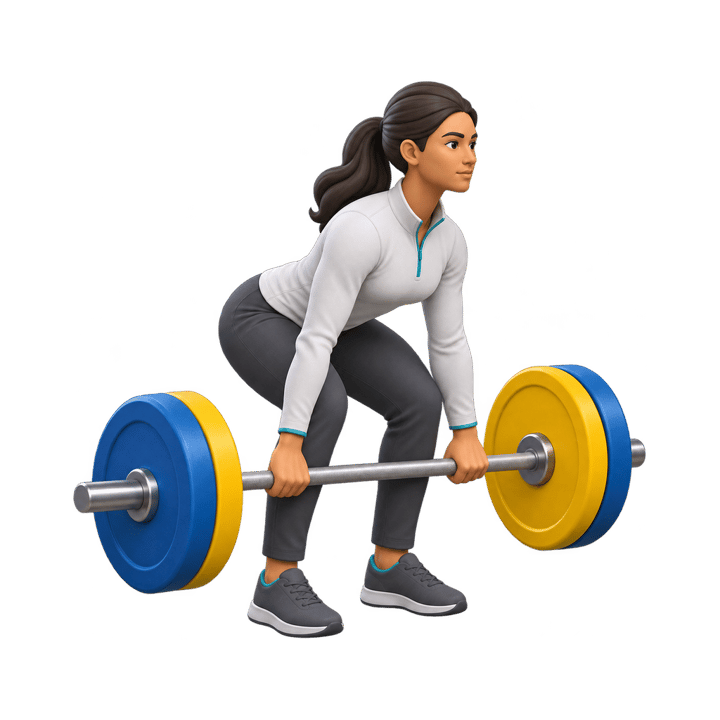
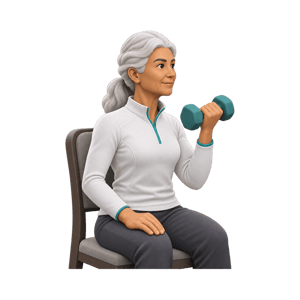
Start this week. Two sessions a week, the same five moves as anyone (a squat, a hinge, a push, a pull and a carry), lighter to begin and a little heavier each time every set feels good. Practice standing on one foot next to the counter every day. Skip max tests, warm up longer, and ask your doctor first if you have heart disease or high blood pressure.
If you remember three things
- 174% in eight weeks. That was the average strength gain in nine frail residents aged about 90.
- 113% against 3%. Residents up to age 98 who trained for 10 weeks, against those who didn’t.
- Waiting costs more at 70. Leg strength in the 70s fell 2.6 to 4.1% a year, about three times faster than muscle.
Why it seems true
Getting weaker feels like part of getting old, as natural as gray hair. Gyms are full of young people, and most fitness advice is aimed at them. Older bodies feel fragile, and lifting something heavy at 75 sounds like asking for a hip fracture. If you’ve never lifted, starting at 70 can feel like you’ve missed your chance.
A picture from daily life
Think of a garden that’s been left alone for a few years. It looks like it’s gone for good. But most of the plants are still there, and a season of watering and weeding brings back more than anyone expects.
Older muscle is like that garden. A lot of the lost strength is in how well the body uses the muscle that’s still there, and that part comes back in weeks.
The nursing home that lifted
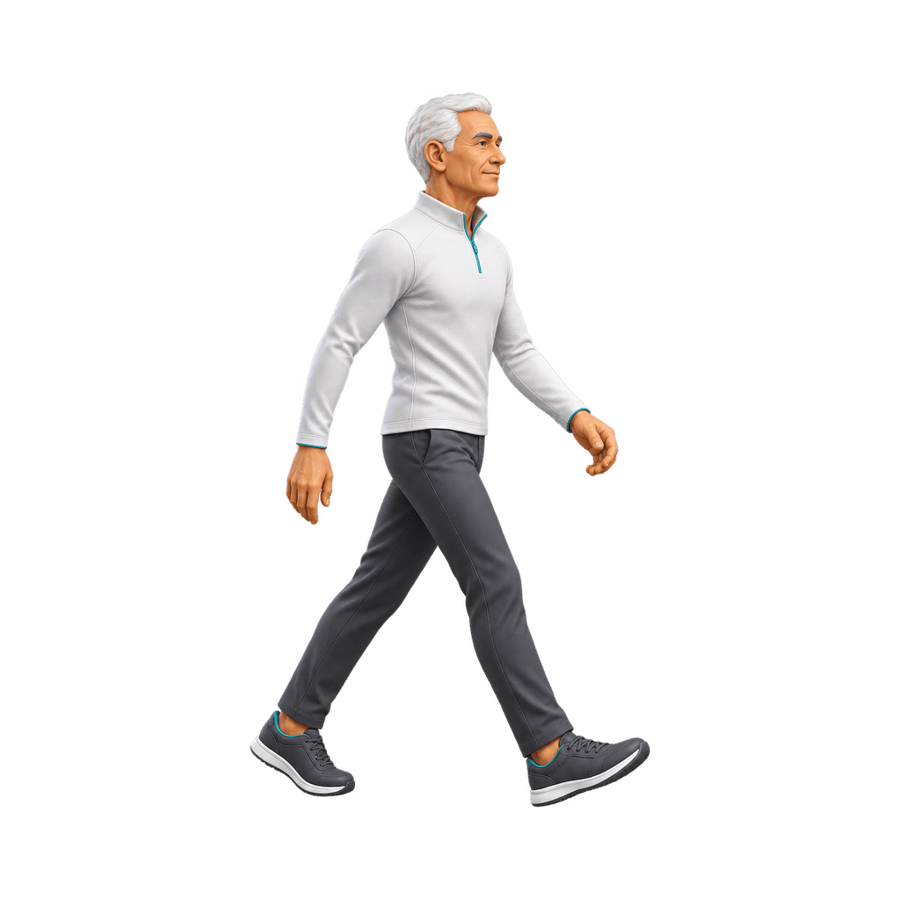
In the late 1980s Maria Fiatarone and her colleagues tested heavy lifting on ten frail residents of a nursing home, aged 90 give or take a year. For eight weeks they did heavy leg training.
The nine who finished raised their strength by an average of 174%. Their thigh muscle grew 9%, and they walked 48% faster on a heel-to-toe balance walk. They published it in JAMA in 1990.
Four years later the team ran a proper randomized trial in 100 frail residents, 63 women and 37 men, average age 87, the oldest 98. After 10 weeks, strength rose 113% in the people who trained, against 3% in those who didn’t. Stair-climbing power rose 28% and walking speed about 12%.
Why it comes back so fast
Strength falls faster than muscle as you age. A 2012 review found strength dropping two to five times faster than muscle in the same people, and in 1,880 people in their 70s, leg strength fell 2.6 to 4.1% a year while leg muscle fell about 1%. The researchers put the gap down to muscle quality, how much force each pound of muscle makes.
A big share of what’s lost is how well you use the muscle you still have, and that’s the kind of strength beginners of any age gain first. Getting older has the full numbers.
What it does for a 70-year-old
At 25, a bit more strength means a heavier squat. At 75 it can mean getting up from a low chair without your hands, carrying your own groceries up the steps and catching yourself when you trip. More than one in four US adults 65 and older falls each year. In the LIFTMOR trial, women around 65 with low bone mass who lifted heavy twice a week for eight months raised their spine density 2.9% while the home-exercise group lost 1.2%.
Once you start, keep going. A 2013 review of 103 studies found strength faded faster after training stopped in people over 65 than in younger people. So plan on two sessions a week for good.
Isn’t it risky?
The worry
Heavy weights at 70 or 90 sound dangerous. Wouldn’t gentle stretching be safer?
The trials
Heavy, supervised training went well, even at 98. In LIFTMOR, women with low bone mass lifted at more than 85% of their max for eight months, and the only problem reported was one minor back spasm. Start with someone who can coach you if possible, build up slowly, and ask your doctor before heavy lifting if you have heart disease or high blood pressure.
7 sources
- Fiatarone MA and others, High-intensity strength training in nonagenarians, JAMA, 1990europepmc.org
- Fiatarone MA and others, Exercise training and nutritional supplementation for physical frailty in very elderly people, New England Journal of Medicine, 1994europepmc.org
- Goodpaster BH and others, The loss of skeletal muscle strength, mass, and quality in older adults: the Health, Aging and Body Composition Study, Journals of Gerontology, 2006europepmc.org
- Mitchell WK and others, Sarcopenia, dynapenia, and the impact of advancing age on human skeletal muscle size and strength, Frontiers in Physiology, 2012pmc.ncbi.nlm.nih.gov
- Watson SL and others, High-intensity resistance and impact training improves bone mineral density and physical function in postmenopausal women with osteopenia and osteoporosis: the LIFTMOR randomized controlled trial, Journal of Bone and Mineral Research, 2018europepmc.org
- Centers for Disease Control and Prevention, Facts about older adult fallscdc.gov
- Bosquet L and others, Effect of training cessation on muscular performance: a meta-analysis, Scandinavian Journal of Medicine and Science in Sports, 2013europepmc.org