How fast do you lose muscle as you get older?
About half a percent of your muscle a year through midlife, and closer to 1% a year by 75. Strength falls two to five times faster than that, so it’s the number to watch. Lifting twice a week slows both at any age, and strength comes back much faster than the muscle does.
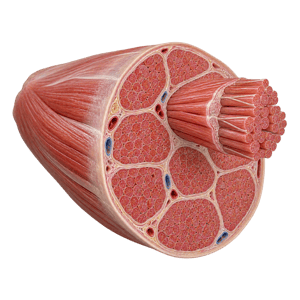
Muscle loss with age (sarcopenia) gets talked about like a cliff you fall off at 50, or a slow fade nobody can stop. Most people judge it by the mirror or the scale, so they don’t notice anything until a jar won’t open or a low chair takes two tries. The muscle you can see is the slow part of the story, and strength goes first, much faster.
What we’d do
Track your strength instead of your size. Every eight weeks, test your grip or the chair stand, the floor rise and one-foot balance. Lift twice a week, every big muscle, and eat protein at every meal. If one of the numbers drops, train that one first, long before anything shows in the mirror.
The numbers
In 2012, a team of researchers pulled together the studies that measured muscle and strength across adult life. The median loss of muscle was 0.47% a year in men and 0.37% in women, or roughly 5% and 4% of your peak per decade. Studies don’t agree on when it starts, with estimates of 27, 45 and 60.
| Men | Women | |
|---|---|---|
| Muscle lost a year, across adult life (median) | 0.47% | 0.37% |
| Muscle lost a year at 75 | 0.80 to 0.98% | 0.64 to 0.70% |
| Strength lost a year at 75 | 3 to 4% | 2.5 to 3% |
In studies that measured both in the same people, strength fell two to five times faster than muscle.
2 to 5xfaster than muscle
How much faster strength falls than muscle with age, in studies that measured both (Mitchell, 2012).
3xin your 70s
Leg strength fell about three times faster than leg muscle in 1,880 people in their 70s (Goodpaster, 2006).
113%stronger at 87
Strength gained in ten weeks of training by frail nursing home residents (Fiatarone, 1994).
Why strength falls faster
It’s like an old phone battery. The phone looks the same and the battery is the same size, but it’s flat by lunchtime. Older muscle can look about the same and still deliver a lot less force.
Strength depends on more than size. Your nerves have to switch the muscle on and fire it together, and each fiber has to pull well. A 1979 study of 15 young adults found that nerve changes explained most of the strength they gained in their first weeks of training, before their muscles grew. With age, the force you get from each pound of muscle drops too, which researchers call muscle quality.
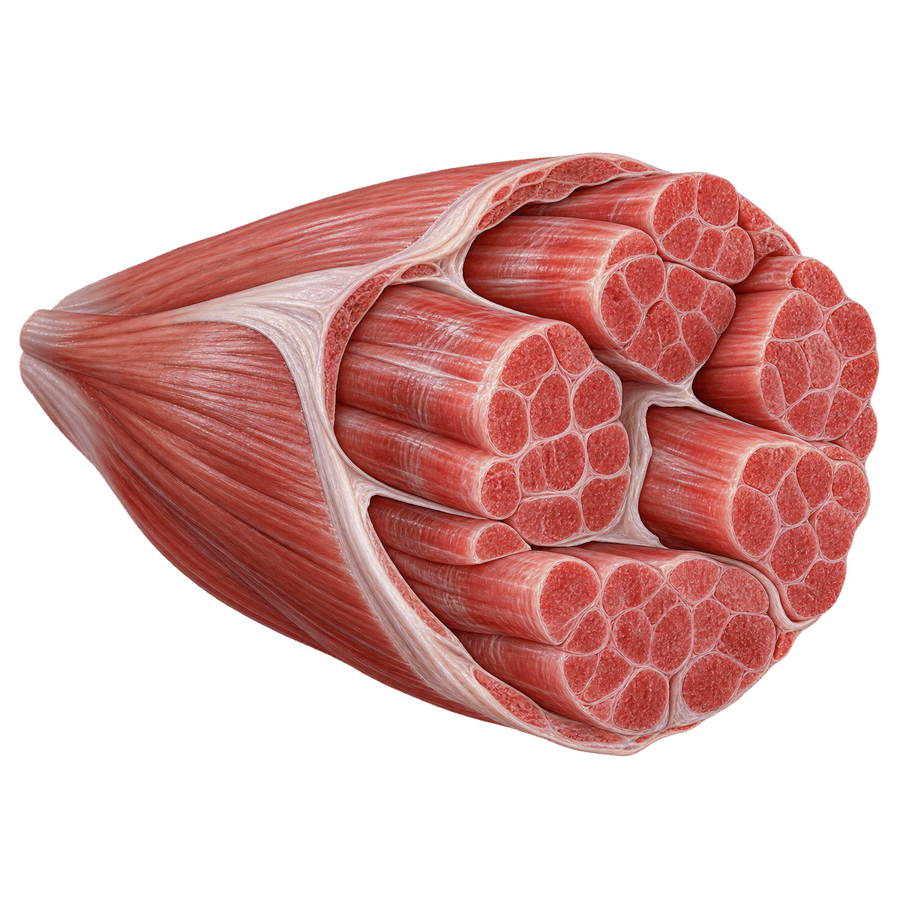
The surprising part came from the Health, Aging and Body Composition study, which followed 1,880 people in their 70s for three years. Leg strength fell 3.4% a year in white men, 4.1% in Black men, 2.6% in white women and 3.0% in Black women, about three times the loss of leg muscle. People who held on to their muscle mass, or even gained some, still lost strength. The researchers concluded that keeping muscle mass alone doesn’t stop strength from falling.
What slows it down
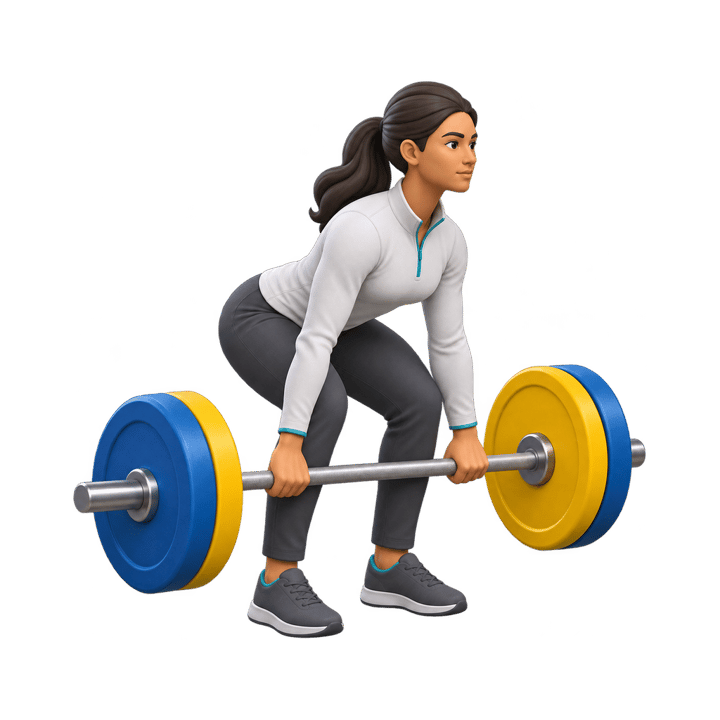
Lifting works on the part that falls fastest. When nine frail nursing home residents aged about 90 trained their legs for eight weeks, strength rose 174% while thigh muscle grew 9%. In a later trial of 100 residents with an average age of 87, strength rose 113% in ten weeks against 3% without training, and the thigh muscle barely changed.
It also leaves again when you stop. A review of 103 studies found strength falls the longer training stops, and falls more in people over 65, so two sessions a week that you keep up do more for you than a hard month and a long break.
Food helps the muscle side. Eat protein in the typical range at every meal (see how much protein you need), and lift while losing weight, since dieting takes muscle too, as it does on a GLP-1.
Find your number
The How strong am I? scorecard puts your grip, floor rise, one-foot balance and, from 60, the chair stand against people your age, and gives you a date to test again.
6 sources
- Mitchell WK and others, Sarcopenia, dynapenia, and the impact of advancing age on human skeletal muscle size and strength, Frontiers in Physiology, 2012pmc.ncbi.nlm.nih.gov
- Goodpaster BH and others, The loss of skeletal muscle strength, mass, and quality in older adults: the Health, Aging and Body Composition Study, Journals of Gerontology, 2006europepmc.org
- Moritani T and deVries HA, Neural factors versus hypertrophy in the time course of muscle strength gain, American Journal of Physical Medicine, 1979europepmc.org
- Bosquet L and others, Effect of training cessation on muscular performance: a meta-analysis, Scandinavian Journal of Medicine and Science in Sports, 2013europepmc.org
- Fiatarone MA and others, High-intensity strength training in nonagenarians, JAMA, 1990europepmc.org
- Fiatarone MA and others, Exercise training and nutritional supplementation for physical frailty in very elderly people, New England Journal of Medicine, 1994europepmc.org