You have to train to failure to grow
Short answerNo
On this page
No. A 2022 analysis of 15 studies found that stopping a couple of reps short built the same strength and the same muscle as going all the way to failure. The 2026 American College of Sports Medicine review of 137 reviews agreed that failure made no consistent difference. Close to failure is what counts.
What we’d do
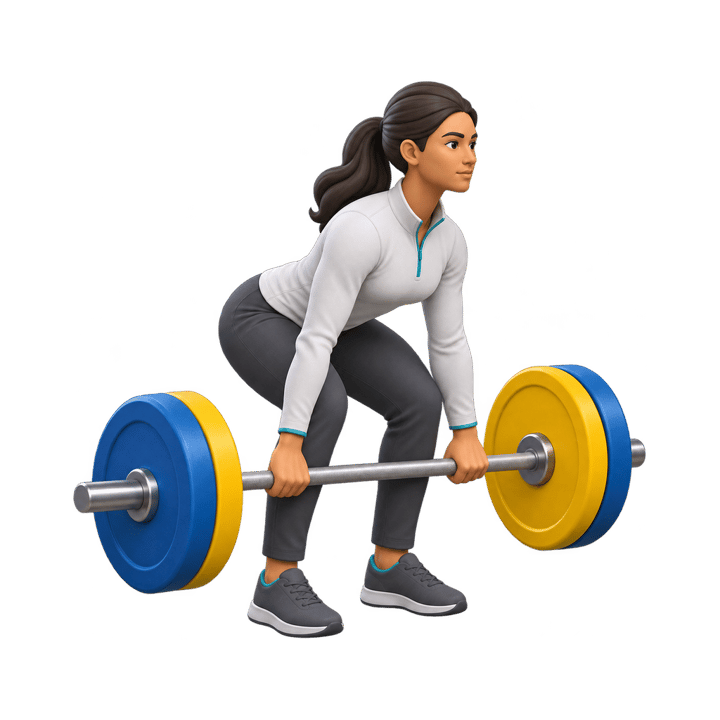
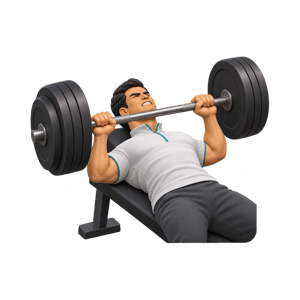
End most sets with two or three good reps still in you. The last reps should be slow and hard, and your form should still be clean. Save true failure for the odd set on a safe exercise, like a machine or a push-up, so you learn what it feels like. Never go to failure on a heavy squat or bench press without someone spotting you.
If you remember three things
- Failure built no more strength or muscle than stopping short, across 15 studies.
- Stopping short did better for strength when the total work wasn’t matched.
- Close still counts. Sets that end far from failure, especially with light weights, build less.
Why it seems true
“No pain, no gain” is one of the oldest lines in fitness. The last rep of a set to failure feels like the one that did the work, with the shaking, the face and the burn. Plenty of gym programs are built on it. And light weights really do need to be taken close to failure to build muscle, which makes failure sound like the magic ingredient.
A picture from daily life
Wring out a wet towel. The first few twists get most of the water out. The last hard twist, with your knuckles white, squeezes out a few more drops and leaves your hands too tired to wring the next one.
A set works the same way. The hard reps near the end do the most good, and the very last one, the one you can’t finish, adds a little and costs a lot of fatigue for the sets after it.
What the studies found
In 2022 four researchers led by Jozo Grgic pooled every study they could find that compared training to failure with stopping short, all in young adults. Across 15 studies there was no difference in strength gains. Muscle growth was about the same too. When the two groups didn’t do the same total amount of work, stopping short came out ahead for strength. The authors concluded that failure isn’t needed for either strength or size, and that it doesn’t seem harmful either.
The 2026 American College of Sports Medicine review looked at 137 reviews covering more than 30,000 people. Training to failure was on its list of things that didn’t consistently change results, alongside equipment type, set structure and planned cycles. Heavy loads, a full range of motion, 2 to 3 sets and lifting early in the session were what raised strength.
Close to failure does count
A 2017 analysis of 21 studies found light weights (60% of max or less) grew as much muscle as heavy weights, but every set in those studies was taken to failure. With a light weight, the reps that do the work all come near the end, so stopping 10 reps short leaves out most of the set. With a heavy weight, every rep is already hard.
That’s why we say two or three reps short. It’s close enough that the set does its job, far enough that your form holds and you can do it again next set and next week. How much weight should I lift?
How to tell when you have two or three left
- The bar slows down. When a rep takes noticeably longer than the first one, you’re getting close.
- Your form starts to slip. If your back rounds, your hips shoot up or you start to twist, stop there.
- Test it now and then. On a safe move like push-ups or a machine, go to failure once and count how many you had left after the rep where you’d normally stop.
Doesn’t failure build more muscle in trained lifters?
The best case for failure
Experienced lifters need it. Once you’ve trained for years, you need every bit of stimulus to keep growing.
What the numbers say
There’s a small effect for size. In the 2022 analysis, trained people grew slightly more muscle with failure. There was no strength benefit, and older adults and very advanced lifters weren’t studied much. If you’re years in and chasing size, taking the last set of an exercise to failure on a safe machine is reasonable. For almost everyone else, stopping short does the same job.
More detail: the one big study built on failure
Some of the longest records of strength training come from a company whose clients did one set to failure on each of six machines, once a week. In 14,690 adults, strength rose about 30 to 50% in the first year. That shows a single hard set once a week works, and it says nothing about whether stopping one rep earlier would have worked just as well. The trials that tested that directly found it did.
4 sources
- Grgic J and others, Effects of resistance training performed to repetition failure or non-failure on muscular strength and hypertrophy, Journal of Sport and Health Science, 2022pmc.ncbi.nlm.nih.gov
- Currier BS and others, ACSM position stand: resistance training prescription for muscle function, hypertrophy, and physical performance in healthy adults, Medicine and Science in Sports and Exercise, 2026pmc.ncbi.nlm.nih.gov
- Schoenfeld BJ and others, Strength and hypertrophy adaptations between low- vs. high-load resistance training, Journal of Strength and Conditioning Research, 2017europepmc.org
- Steele J and others, Long-term time-course of strength adaptation to minimal dose resistance training, Research Quarterly for Exercise and Sport, 2023europepmc.org