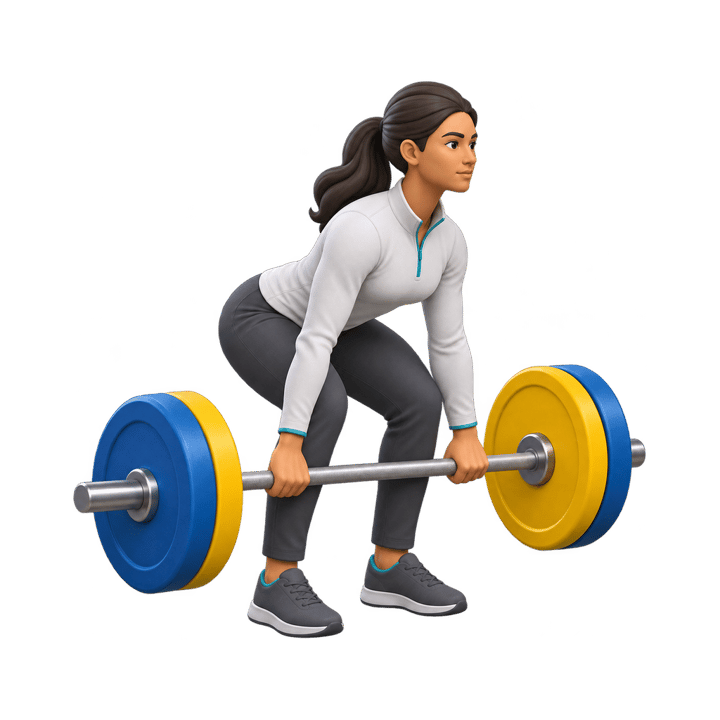
The more you lift, the longer you live
Short answerSort of
On this page
Sort of, up to about two hours a week. In 147,374 US adults, the risk of death fell as lifting rose to 90 to 119 minutes a week, then stopped falling. A review of 16 studies found the lowest risk near 40 minutes. Past that point, the extra hours did nothing more for a long life, and walking did more than lifting alone.
What we’d do
Lift about an hour a week in two sessions, and go up to two hours if you enjoy it. If you have more time than that, spend it walking. Lift more for strength, sport or how you look if you like, since there’s no sign it hurts. Just don’t expect the third and fourth hours to add years.
If you remember three things
- The best lifting group was 90 to 119 minutes a week, with 13% lower risk of death than people who didn’t lift.
- Over two hours, the benefit shrank to 8%, still better than none.
- Walking did more. Enough walking with no lifting went with 26% fewer deaths, twice the best lifting group.
Why it seems true
With most good habits, more seems better. If an hour of lifting is good for you, three should be better, and the most dedicated lifters in the gym certainly look healthy. The headlines about lifting and long life rarely mention where the benefit levels off.
A picture from daily life
Watering a plant helps it grow, up to a point. Give it twice as much and it doesn’t grow twice as fast, and the extra water just runs out the bottom of the pot.
Lifting looks the same in the studies of long life. The first hour a week does most of the good, the second a little more, and after that the extra runs out the bottom.
What the Harvard study found
In June 2026 researchers at Harvard published the biggest study yet of lifting and lifespan. They used three US studies of nurses and other health professionals, 147,374 people asked about their exercise every 2 to 4 years for up to 30 years. After taking their walking and other aerobic exercise into account, this is how much lower their risk of death was than people who didn’t lift.
Harvard’s press release said that lifting more than 120 minutes a week “did not appear to provide any additional benefit”. Deaths from cancer were lower only at the smaller doses, under an hour a week.
The second opinion
A 2022 review pooled 16 studies that followed people over time. Any lifting went with 15% lower risk of death. The curve was J-shaped, lowest near 40 minutes a week (17% lower) and still below no lifting up to about 140 minutes. Past that, the estimate drifted back toward no difference.
The two studies put the bottom of the curve in different places, about 40 minutes and about 90 to 119. But both agree that the benefit flattens out somewhere between one and two hours a week.
Where the extra time does more
The Harvard team also looked at lifting and aerobic exercise together. People who walked 150 to 300 minutes a week and didn’t lift at all had 26% fewer deaths than people who did neither. Among people who barely walked, the best lifting group had 11% fewer. People who did plenty of both did best of all, with about 45% fewer. So an hour that would be your third hour of lifting buys a lot more as walking. How much is enough?
So is lifting a lot bad for you?
The worry
The curve bends back up. People who lifted the most had less benefit than people who lifted a moderate amount, so maybe heavy lifting does some harm.
What we know
Nobody knows yet why it bends. At 120 minutes or more, people still had 8% lower risk than people who didn’t lift. Few people lift that much, so those numbers are the least certain on the curve. And people chose how much to lift, so heavy lifters may differ in other ways. There’s no evidence here that lifting more harms you, only that the extra doesn’t add years.
These studies followed people who picked their own exercise, mostly white, middle-aged and older health professionals, and their lifting was self-reported. They show an association, not a personal risk, and no study here adds a number of years to anyone’s life.
3 sources
- Zhang Y and others, Long-term resistance training with all-cause and cause-specific mortality, British Journal of Sports Medicine, 2026pmc.ncbi.nlm.nih.gov
- Harvard T.H. Chan School of Public Health, Moderate amount of strength training each week could boost longevity, 2026hsph.harvard.edu
- Momma H and others, Muscle-strengthening activities are associated with lower risk and mortality in major non-communicable diseases, British Journal of Sports Medicine, 2022pmc.ncbi.nlm.nih.gov